
On this page:
- What is under keel clearance?
- Requirements under the national law
- About the UKCM system
- Where the UKCM systems operate
- Responsibilities of masters and pilots
- UKCM route boundaries
- UKCM system waypoints
- UKCM tutorials
- Related information
What is under keel clearance?
Under keel clearance (UKC) is the vertical distance between the lowest part of a ship's hull and the seabed. Maintaining an adequate UKC margin is essential to keep the vessel clear of the seabed and significantly reduces the risk of grounding.
The UKCM system helps coastal pilots assess whether there is enough water beneath the vessel's keel during a transit through Torres Strait.
Requirements under the national law
- Under Marine Order 54 (Coastal pilotage), vessels transiting the Torres Strait with a draught between 9 m and 12.5 m, must have a UKCM system plan.
- A licenced coastal pilot will develop this transit plan.
- The required under keel clearance limit set by AMSA is 1 m or 10% of the vessel's draught.
About the UKCM system
A UKCM system is an advanced, web-based aid to navigation operated by AMSA for large ships transiting the Torres Strait. Declared 'operational' by AMSA in December 2011, it represents the first time such a system has been implemented in an Australian coastal environment, as they are typically used in ports. Following recommendations from a 2007 study, its use became a condition of pilotage providers' licences in January 2014 and was officially included in Marine Order 54 in July 2014.
The system helps coastal pilots and vessel operators plan and monitor safe passage through shallow waters by estimating a vessel's under keel clearance in near real time.
The UKCM system calculates the depth of water beneath a vessel throughout a transit using information such as:
- detailed channel depth data
- tide height
- tidal streams
- vessel position data from AIS
- vessel speed
- vessel motion predictions, including squat and heel
- environmental data from tide, tidal stream and wind sensors
This allows the system to calculate appropriate tidal windows and continuously monitor the vessel's UKC margin throughout the transit.
Where the UKCM system operates
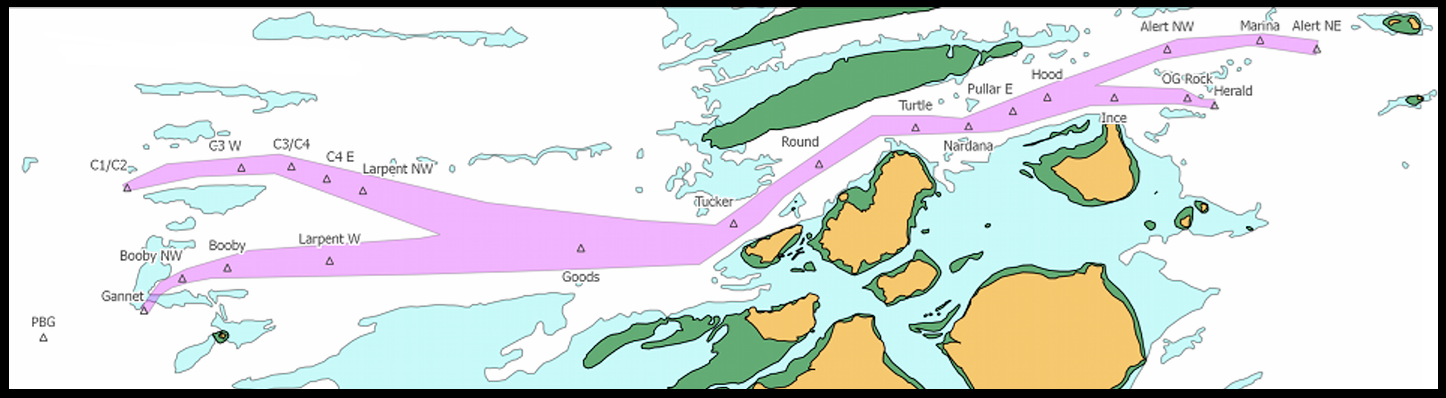
The UKCM system operates in key shipping routes within Torres Strait, including:
- Prince of Wales Channel
- Varzin Passage
- Gannet Passage.
The Torres Strait is a vital shipping route for the Asia-Pacific region, situated between the northern tip of Australia and Papua New Guinea.
It is a challenging and navigationally hostile area. Large vessels navigating the region face numerous hazards, including shallow waters, reefs, complex tides, strong tidal streams, strong winds, and reduced visibility caused by seasonal rain squalls.
Responsibilities of masters and pilots
The UKCM system is strictly an aid to navigation, meaning the ultimate responsibility for safe navigation remains with the master and the pilot.
The system must be used in conjunction with:
- official hydrographic products
- voyage planning processes
- other navigation aids
- prudent seamanship practices.
The UKCM system complements the Great Barrier Reef and Torres Strait Vessel Traffic Service (REEFVTS) as part of AMSA's protective measures to enhance shipping safety in these environmentally sensitive areas.
UKCM route boundaries
See a graphic overview of UKCM route boundaries:
- Torres Strait deep channel 1 PDF2.74 MB
- Torres Strait deep channel 2 PDF2.96 MB
- Torres Strait full channel 1 PDF2.42 MB
- Torres Strait full channel 2 PDF2.91 MB
These documents also provide coordinates (latitude/longitude (WGS84)) of the existing deep draught and standard UKCM system route boundaries through Torres Strait.
UKCM system waypoints
Access coordinates of the UKCM system waypoints in latitude/longitude (WGS84): UKCM waypoints PDF16.34 KB.
These positions are provided to assist pilots in correlating UKCM system information observed in transit planning and transit monitoring in their pilotage plan.
UKCM tutorials
Registered UKCM system users can access UKCM worked tutorials PDF3.34 MB.
These tutorials cover a range of typical activities in the UKCM system.