AMSA Connect phone services will be closed for the public holiday on Monday 8 June 2026, reopening on Tuesday 9 June 2026. Our search and rescue team will continue to operate during this time.
Showing 281 - 300 of 896 results for WA 0821 1305 0400 Vendor Pemborong Hidroseeding Stabilisasi Lereng Aceh Barat Daya Aceh
 Esso Gippsland, 22 January 1982On 22 January 1982 at approximately 9 pm, the oil tanker Esso Gippsland was in the process of loading at Port Stanvac jetty, South Australia, when a large quantity of industrial fuel oil leaked from the air vent and ullage port of its no.2 starboard tank.Last updated: 11/09/2020
- Managing crew fatigueLearn how to control the risk of fatigue to your crew and your operation.Last updated: 03/27/2026
- Annual Regulatory Program 2020–21Our regulatory program is prepared annually and contains details of planned and completed changes to our regulatory instruments.Last updated: 07/13/2022
- Paying an infringement penaltyIf you have been issued with an infringement notice, you have 28 days to pay the infringement penalty or contact us about your payment options.Last updated: 02/11/2025
 Former South Australia police officer helps save maritime livesWatch the video of Mark Jacobs who has hung up his snorkel and fins to help save lives across 10 per cent of the Earth’s surface.Last updated: 05/03/2022
- New Zealand domestic certificates of competencyHow to use your domestic New Zealand certificate of competency to work on domestic commercial vessels in Australia.Last updated: 06/28/2021
- Certificates of operation (CoO)If you own or operate a domestic commercial vessel in Australia, you are required to obtain a certificate of operation before you operate the vessel.Last updated: 05/30/2025
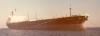 World Encouragement, 10 September 1979At 8.55 am on 10 September 1979, the tanker World Encouragement was conducting berthing operations at an Australian Oil Refinery (AOR) mooring at Kurnell in Botany Bay, New South Wales, when oil began rising to the water surface from beneath the ship.Last updated: 11/09/2020
- Responding to search and rescueOur 24/7 centre responds to search and rescue (SAR) incidents throughout Australia.Last updated: 03/27/2025
- Poor risk assessment of river entrance bar crossing results in near misses with surfersA 2C rescue vessel was preparing to depart a river entrance bar with 11 people onboard. The observed sea state was a wave height (breaking) of 1.4 to 1.8 metres. The entrance bar had a moderate to high level of congestion of jet skis and surfboard riders positioned within the aids to navigation departure leads. The vessel came within very close proximity to surfers on 3 occasions whilst negotiating the breaking sea conditions. The vessel then broached upon a wave resulting in the vessel heeling to port and becoming unable to be controlled due to the force of the wave.Last updated: 08/29/2023
- Survey Matters – November 2022In this edition we look at the most common reasons for certificate of survey refusal.Last updated: 02/02/2023
- Marine navigation levy (MNL)The MNL applies to most commercial vessels operating in Australia. It helps fund the cost of operating and maintaining marine aids to navigation systems.Last updated: 12/04/2025
- Medical and first aid equipmentAll vessel owners need to do a risk assessment to work out what medical and first aid equipment to carry. Class 1, 2 and 3 survey vessels have minimum medical and first aid equipment they are required to carry.Last updated: 12/23/2025
- MV Torungen, 26 July 1999On Monday 26 July 1999, the crude oil tanker the MV Torungen (25 tonnes), was secured in the offshore Varanus Island Marine loading terminal, located approximately 4.2 kilometres north-east of Varanus Island, Western Australia.Last updated: 11/09/2020
- Protection of the sea levy (PSL)The PSL applies to vessels that have carried 10 tonnes or more of oil while operating in Australia, any time during a quarter. It helps fund the response to marine pollution incidents.Last updated: 12/04/2025
- Guide to our privacy policyA guide to our privacy policy.Last updated: 07/08/2025
- Parasailing safety guidanceWe have released some safety guidance for commercial parasailing operators. Parasailing vessels are considered domestic commercial vessels under the National law.Last updated: 10/25/2023
- Navigation and anchor watch on domestic commercial vesselsGuidance on ensuring appropriate crewing for safe navigation for domestic commercial vessels.Last updated:
- AMSA's use of body worn camerasNew body worn cameras for AMSA frontline staff increases safety and transparency.Last updated: 12/01/2021
- Calculate sea service for an international certificateHow to calculate your sea service before you apply for a sea service assessment.Last updated: 07/01/2024