The website is undergoing maintenance today from 11am AEST. You may experience temporary loading issues. We apologise for any inconvenience.
Showing 321 - 340 of 583 results for WA 0821 1305 0400 Service XRF Bruker S8 Tiger Terpercaya Lampung Selatan Lampung [[Tiga Pillar]]
 EPIRB requirements—find out what the changes mean for your DCV operationThe type of EPIRB you need depends on vessel class, length, flotation and operating area.Last updated: 09/22/2021
 Working together to enhance maritime safety in the Torres StraitAMSA's Safety Advisor, Desley Thompson, travelled to Torres Strait communities in February to support the Torres Strait Marine Safety Program.Last updated: 03/07/2025
- North-East Shipping Management Plan—action updateThe North-East Shipping Management Plan identifies actions based on information about the nature of shipping activity in the north-east region as well as the experience and knowledge of members of the North-East Water Space Management Working Group.Last updated: 08/06/2025
 Hazardous gases: carbon monoxide, hydrogen sulphide and carbon dioxideToxic gases can quickly build up on board vessels and kill a crew member or passenger in minutes. Identify equipment, appliances and systems that create these gases and reduce the risks.Last updated: 12/09/2025
- Very low sulphur fuel oil studyWe are responsible for responding to marine oil spills and supporting the National Plan for Maritime Emergency partners in doing the same within their jurisdictions.Last updated: 06/23/2021
- Scale D medical cabinetSurvey passenger vessels with offshore operations (Class 1B) are required to carry a Scale D medical cabinet and a Scale F first aid kit on board.Last updated: 12/23/2025
- Scale F first aid kitSurvey vessels in these classes are required to carry a Scale F first aid kit on board: 1B, 1C (with unberthed passengers), 1D (with berthed passengers), 1E (with berthed passengers), 2B, 2C, 3B and 3C.Last updated: 12/23/2025
- The National SystemWe are Australia’s national maritime safety regulator for domestic commercial vessels that operate within Australian waters.Last updated: 07/04/2023
- Implementation of the sulphur regulationThe International Maritime Organization (IMO) has developed tools to support the implementation of the low sulphur fuel limit.Last updated: 11/14/2023
- Survey Matters—April 2020In the April edition we tell you what we are doing to support our industry during the COVID-19 period, we provide information about passive fire safety measures, give guidance on inspecting internal buoyancy or sealed internal hull voids, and more.Last updated: 10/19/2025
- International search and rescue conventionsWe follow the guidance of international conventions when conducting search and rescue (SAR) activities.Last updated: 04/22/2021
- Marine navigationWe are responsible for providing navigational systems and services to facilitate the safe and efficient navigation of ships within Australian waters.Last updated: 10/17/2025
- Scale G first aid kitsSurvey vessels in these classes are required to carry a Scale G first aid kit on board: 1D (with unberthed passengers), 1E (with unberthed passengers), 2D, 2E, 3D and 3E.Last updated: 12/23/2025
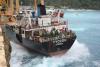 MV Tycoon, 9 January 2012On Sunday 9 January 2012, the cargo vessel the MV Tycoon broke free from its mooring at Flying Fish Cove, Christmas Island, and washed against the seawall and nearby cliff face. The ship had been loading phosphate at the time of the incident.Last updated: 11/09/2020
- Exemption 48 - Marine Safety (Houseboats)You do not need to apply to us for this exemption.You will need to keep your supporting documents on board and ready to be presented to authorities if required.Last updated: 03/12/2025
- Marine Order 71 review: Consultation report October 2023This report provides an overview of the consultation process, key issues raised during public consultation and the key changes to the Marine Order.Last updated: 11/23/2023
- Buoyancy and stability after flooding - C6BStandards for maintaining buoyancy after flooding, grounding, or collision.Last updated: 11/07/2024
 New build trends in Australia's domestic fleet (2023 - 24)Explore the trends in vessel design, materials and certification shaping Australia’s domestic fleet. See what was built, where, and how vessels are evolving to meet industry needs.Last updated: 07/22/2025
- Regulator Performance Framework self assessment report 2019-20We undertook our fifth annual self-assessment of its performance against the Regulator Performance Framework in August 2020Last updated: 12/22/2020
- Scale E medical cabinetSurvey passenger vessels with offshore operations Class 1C (with berthed passengers), 2B and 3B, are required to carry a Scale E medical cabinet and a Scale F First aid kit on board.Last updated: 12/23/2025