The website is undergoing maintenance today from 11am AEST. You may experience temporary loading issues. We apologise for any inconvenience.

Showing 541 - 560 of 821 results for WA 0812 2782 5310 Tukang Buat Neon Box Plang Dokter WIlayah Getasan Kab Semarang
- Bringing a vessel to Australia or going on an overseas voyageIf you're planning to bring a vessel to Australia, or take a domestic commercial vessel (DCV) on an overseas voyage, you need to comply with Australian regulations and international standards.Last updated: 12/14/2023
- Automatic identification systems on offshore structuresWe are responsible for ensuring there is a consistent approach to the use of AIS on offshore structures and facilities. Find out what we will ask you when you apply.Last updated: 09/30/2024
- Exercise Constant BearingSouth Australia hosted the 2017 National Plan Exercise from 5 to 7 December in Adelaide.Last updated: 10/27/2020
 Tackling marine plastic litter this month and beyondJoin AMSA this month to stop marine plastic litter for good.Last updated:
- MASTREP guide 2016The Modernised Australian Ship Tracking and Reporting System as described in Marine Order 63 Vessel Reporting Systems is used to track the location of vessels.Last updated: 08/03/2020
- Eyesight and medical requirements for domestic certificatesHow to meet the medical requirements for domestic seafarer certificatesLast updated: 03/05/2024
- Response to the Port Stanvac oil spill—report of the incident analysis teamFollowing the oil spill at Port Stanvac in South Australia on 28 June 1999, there was a review to investigate the reason for the spill and whether any corporation or individuals were responsible for the spill and should be prosecuted.Last updated: 11/09/2020
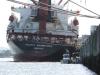 Pacific Adventurer, 11 March 2009The cargo ship Pacific Adventurer lost upwards of 270 tonnes of heavy fuel oil when holed on its port side while en route to Brisbane from Newcastle.Last updated: 11/09/2020
- Global Peace oil spill—report of the incident analysis teamFollowing the Global Peace oil spill in Gladstone on 24 January 2006, two separate inquiries were undertaken to investigate the circumstances surrounding the cause of, and response to the oil spill.Last updated: 11/09/2020
- Tasmania fuel oil suppliersFind local suppliers of fuel oil in Tasmania.Last updated: 09/04/2025
- Exercise Westwind 2015 Evaluation ReportExercise Westwind was the National Plan exercise for 2015. Exercise Westwind comprised two distinct phases.Last updated: 11/09/2020
- Response to the Montara Wellhead Platform incidentReport of the Incident Analysis team into the response by the National Plan to Combat Pollution of the Sea by Oil and Other Noxious and hazardous Substances, to the Montara Wellhead Platform incident, March 2010.Last updated: 11/09/2020
-
Plastic Free July: AMSA’s action to reduce marine plasticsPlastic Free July encourages millions worldwide to reduce plastic consumption and find sustainable alternatives. As the national maritime regulator, we commit to reducing ocean plastics that harm our precious marine environment. To do this we work both internationally and at home.Last updated: 08/09/2024
- Marine Order 54 (Torres Strait Draught Variation) – Exemption 2021This exemption is for AMSA-licensed coastal pilots and pilotage providers.Last updated: 12/02/2021
- Marine Order 55- Consultation report 2024Marine Order 55 (Vessels carrying industrial personnel) 2024 Consultation Report – Feb - Apr 2024Last updated:
- Cargo securing focused inspection campaign 1 August–31 October 2020This is advice for ship owners and masters. We will undertake a focused inspection campaign (FIC) on cargo securing arrangements from 1 August to 31 October 2020. This is in response to recent events where containers have been lost into the sea off the Australian Coast.Last updated: 03/01/2021
- Energy efficiency design measureThe Energy Efficiency Design Index (EEDI) is a mandatory measure that promotes the use of energy efficient (less polluting) equipment and engines on new build ships.Last updated: 07/17/2025
- Exercise James Cook post exercise report—Botany Bay NSWExercise James Cook was the sixth biannual oil spill response exercise to be conducted.Last updated: 11/09/2020
- Victoria fuel oil suppliersFind local suppliers of fuel oil in Victoria.Last updated: 09/04/2025
- Crew member crush injury – line handlingA crew member’s arm was crushed between the vessel and a pylon while tending to mooring lines.Last updated: 11/21/2024