AMSA Connect phone services will be closed for the public holiday on Monday 8 June 2026, reopening on Tuesday 9 June 2026. Our search and rescue team will continue to operate during this time.
Showing 761 - 780 of 971 results for WA 0812 2782 5310 Jasa Desain Kitchen Set Ukuran 2 Meter Profesional Tanon Sragen
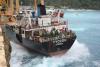 MV Tycoon, 9 January 2012On Sunday 9 January 2012, the cargo vessel the MV Tycoon broke free from its mooring at Flying Fish Cove, Christmas Island, and washed against the seawall and nearby cliff face. The ship had been loading phosphate at the time of the incident.Last updated: 11/09/2020
- Bunker fuel weathering studyIntentional and illegal discharge of bunker fuel oil and waste oils at sea from vessels is the most common type of oil spill investigated by Australian regulatory agencies.Last updated: 11/14/2023
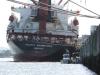 Pacific Adventurer, 11 March 2009The cargo ship Pacific Adventurer lost upwards of 270 tonnes of heavy fuel oil when holed on its port side while en route to Brisbane from Newcastle.Last updated: 11/09/2020
- Victoria fuel oil suppliersFind local suppliers of fuel oil in Victoria.Last updated: 09/04/2025
- Checklist for planned maintenance focused inspection campaignAMSA surveyors will be using the checklist below when inspecting ships as part of our planned maintenance focused inspection campaign.Last updated: 12/10/2021
- NP–GUI–001: Deployment of National Plan equipmentThis guidance sets out the considerations and processes to be observed when seeking the deployment of National Plan equipment for a marine pollution incident.Last updated: 03/18/2024
- Proof of identityProof of identity is required when applying for a certificate of competency or seafarer’s service book.Last updated: 11/13/2023
- Nearest land under MARPOLYou must be a specific distance from the nearest land before a discharge at sea can be made.Last updated: 08/13/2020
- Policies and requirements for registered training organisations delivering international certification trainingFind policies and requirements for registered training organisations to obtain AMSA approval for International Convention on Standards of Training, Certification and Watchkeeping for Seafarers (STCW) training.Last updated: 10/27/2020
 Career opportunities for graduates and studentsLaunch your career with AMSA.Last updated: 03/06/2025
- NP-GUI-016: National Plan maritime discharges of oil and oily water during emergency and response situationsDischarges into the sea from a vessel of oil, oily water, decant water, or water emanating from an oily water separator is strictly regulated under Australian maritime law.Last updated: 03/18/2024
- Response to the Iron Baron oil spill—report of the review groupFollowing the oil spill at Port Stanvac in South Australia on 28 June 1999, an inquiry was undertaken to investigate the reason for the spill and whether any corporation or individuals were responsible and should be prosecuted.Last updated: 11/09/2020
 Have your say—Wilsons Promontory Lighthouse heritage management planWe are seeking feedback on the draft Wilsons Promontory Lighthouse heritage management plan.Last updated: 11/26/2019
- Approach to regulatory action against certificates of competencyThe National Law places obligations on maritime operators and other parties to ensure safety of persons and vessels and protection of the marine environment.Last updated: 12/28/2022
- Guidance for deceased estatesHow to manage a deceased estate with AMSA.Last updated: 10/09/2024
- How flag State administration works in AustraliaAs a flag State, AMSA are responsible for making sure Australian ships comply with relevant legislation/s.Last updated: 04/14/2025
- Cargo marine orders and publicationsYour vessel may be inspected to verify your compliance with cargo requirements. These requirements and regulations apply to safety-related aspects for marine carriage of cargo.Last updated: 03/29/2021
- Response to the Pasha Bulker grounding—report of the incident analysis teamFollowing the Pasha Bulker grounding off Newcastle on 8 June 2007, three separate inquiries were undertaken to investigate the circumstances surrounding the cause of, and response to, the incident.Last updated: 11/09/2020
- Exemption 6 - Marine Safety (Periodic survey, equipment certification, compass adjustment and liferaft servicing)This exemption allows DCV owners an extension of time for obtaining periodic or load line surveys, or a new certificate of currency for equipment. It also allows them to operate without required compass adjustments or while a liferaft is being serviced.Last updated:
- Response to the Laura D'Amato oil spill—report of the incident analysis teamThis report is a comprehensive analysis of the management of the incident from an oil spill response perspective.Last updated: 11/09/2020