On 1 June 2025, we introduced new requirements for safety management systems (SMS).
These changes affect all domestic commercial vessels. Find out what you need to do.
We are also introducing simplified SMS requirements for smaller, less complex vessels. Check if your vessel is eligible.
Fatigue is a state of weariness. It can happen quickly, such as when doing heavy physical work. It can also build up over time, for example when you miss some sleep over several nights.
On this page:
Signs of fatigue
Look out for signs of fatigue:
- yawning
- irritability, mood swings
- head nodding, microsleeps
- poor hand-eye coordination
- slow reaction time
- difficulty concentrating or thinking clearly
- slurred or garbled speech
- poor judgement of distance, speed and time.
Impacts of fatigue
Impacts to your operation
Fatigue increases the risk of:
- losing control of the vessel
- collisions and groundings
- dropping objects like tools or parts
- missing normal checks and procedures.
Impacts to health
Fatigue can contribute to developing:
- depression and anxiety
- digestion problems
- high blood pressure
- heart disease
- diabetes.
Causes and control measures
- Lack of quality sleep
Most accidents involving fatigue include a lack of sleep or poor quality sleep. Poor quality sleep is when sleep is disturbed by things like light, noise, motion, alcohol, drugs or stress.
We can also become fatigued when we don’t get enough sleep to make up for lost sleep.
Controls
People need between 7-9 hours of sleep per night to perform adequately and effectively. Any less than this can result in fatigue.
Engage with your crew and:
- Discuss what their usual day looks like, including time already spent working, their commute, time at home, other activities or other employment.
- Plan when they can have a minimum guaranteed of 7 hours of quality, uninterrupted sleep. Talk to your crew, and where possible their support network, to make sure they are aware of fatigue risks.
- Ensure the crew can monitor and communicate about their fatigue levels openly.
Each crew member should:
- commence work well rested
- monitor their fatigue on shift
- report fatigue related issues to the master.
- Body clock disruptions
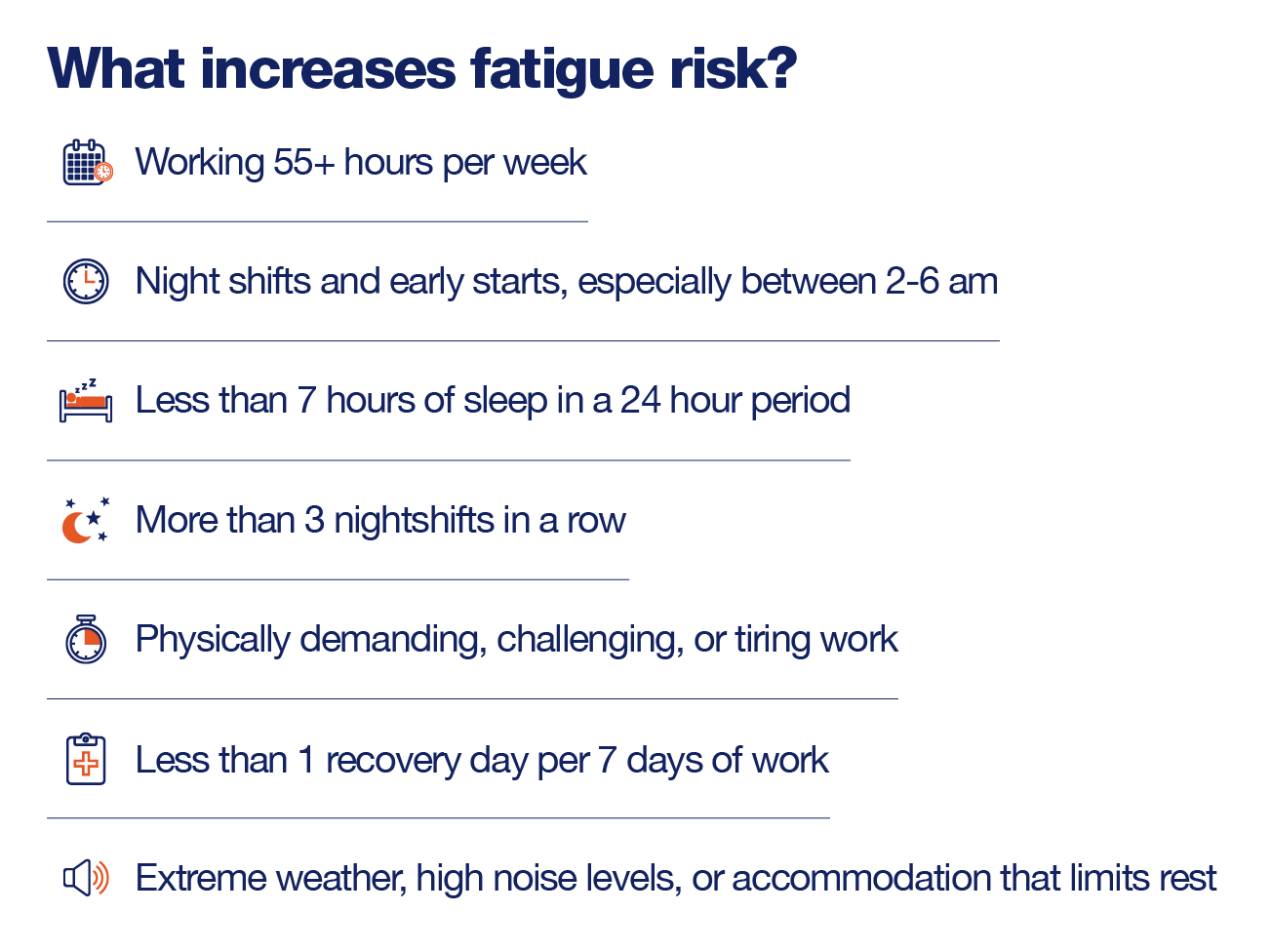
Our body clocks naturally program us to be drowsy in the late afternoon and sleep at night. Shift work is sometimes an unavoidable part of working on the water, which is why body clock disruptions must be carefully managed to reduce the risk of fatigue impacting safety.
Controls
Where possible, avoid scheduling critical operations:
- Between 3am-6am
- Between 3pm-5pm
If that’s not possible due to the nature of your operation, ensure other mitigation strategies are in place.
- Work and job design
Common features of work and job design that lead to fatigue are:
- not enough time for sleep between work operations
- unpredictable work schedules
- a long workday
- physical tasks
- boring or repetitive work
- few or no breaks
- a pay system that encourages long hours
- trying to sleep when your body is naturally alert (e.g. sleeping during the day)
- mentally demanding tasks.
Controls
Consider:
- implementing short rest breaks during operations
- rotating tasks that crew have been assigned to (where appropriate)
- creating opportunities for breaks and rest.
Research shows that naps as short as 10 to 15 minutes can deliver measurable benefits to performance while staving off fatigue.
- Work environment
The maritime work environment is stressful on crew and can make fatigue from lack of sleep worse. Common environmental stressors are:
- cold
- vibration
- heat
- noise
- vessel motion.
Controls
If crew are out on the water for a prolonged period or need to sleep on the vessel, provide:
- a dark, quiet, warm and comfortable place to rest and sleep
- enough time for restorative sleep.
Consider minor changes to the physical environment, such as basic sound proofing and black-out curtains.
- Lifestyle and home
People often sacrifice quality sleep to balance:
- time at work
- commuting to and from work
- other employment
- time with loved ones
- other personal responsibilities at home.
Diet, fitness, alcohol and drug use can also impact quality sleep and a crew member’s susceptibility to fatigue.
Controls
The impacts of a crew member’s lifestyle and home demands must be factored into a holistic approach to fatigue management. While you can’t control crew’s lifestyle and home demands, you should factor them into operational planning.
A master and crew should discuss issues that are affecting fatigue and the benefits of a healthy lifestyle can have on increasing a crew member’s resilience against fatigue.