AMSA Connect phone services may have longer wait times on Monday 1 June 2026 while we operate with reduced staffing due to the Reconciliation Day Public Holiday in Canberra. Our search and rescue team will continue to operate during this time.

Showing 241 - 260 of 888 results for WA 0812 2782 5310 Biaya Buat Interior Rumah Type 90 Murah Serengan Solo
- Vessels owned by community groups and clubsVessels owned and operated by community groups or clubs may or may not be domestic commercial vessels.Last updated: 01/13/2026
- Poor risk assessment contributes to charter vessel running agroundA charter vessel with passengers was conducting a cruise around Sydney Harbour when it narrowly missed an unlit runabout at night. The vessel ran aground, and two attempts to tow the vessel off the sandbank were unsuccessful. The investigation found that the master did not risk-assess the route and respective conditions. The vessel safety management system provided the master with no clear direction on safe routes to follow. The command, control, and communication with and between the crew in relation to emergency procedures and response was ineffective.Last updated: 05/30/2025
- Short-term measure to reduce greenhouse gas emissions from existing shipsThe short-term measure under the MARPOL Convention requires ships engaged on international voyages to make improvements to deliver a reduction in their carbon intensity by an average of at least 40% by 2030 (compared to 2008 levels), in line with the target set by the International Maritime Organization (IMO).Last updated: 07/17/2025
- Era, 30 August 1992On 30 August 1992 the fuel tank of Era was ruptured by the bow of the tug Turmoil during berthing operations at Port Bonython, South Australia, during high winds. Approximately 300 tonnes of bunker fuel was released into Spencer Gulf.Last updated: 11/09/2020
- Unheeded weather warnings result in fishing charter vessel floodingA charter fishing vessel proceeding to a fishing spot began experiencing progressively worsening weather conditions and water ingress. Despite the owner’s warning prior to departure and passenger complaints, the master continued to the fishing destination. Strong winds and waves hampered anchoring, with water accumulating on deck through the transom door to the point of flooding. The vessel’s EPIRB was deployed, and a rescue helicopter attended, winching the master and passengers to safety.Last updated: 08/29/2023
- E-learning on the horizon for FijiMohammed Taslim is passionate about marine education in the Pacific and has his sights set on promoting e-learning study for seafarers in Fiji in the not-too-distant future.Last updated: 05/03/2022
- LPG systems for engines – C5DStandards for installing and maintaining engines fuelled by liquefied petroleum gas (LPG).Last updated: 08/01/2023
 Career opportunities for graduates and studentsLaunch your career with AMSA.Last updated: 03/06/2025
- Passenger safety on domestic commercial vesselsMarine order 504Last updated: 12/15/2025
- Discharges in emergenciesMaritime discharges of oil and noxious liquid substances during emergencies and pollution response situations.Last updated: 08/13/2020
 EPIRB requirements—find out what the changes mean for your DCV operationThe type of EPIRB you need depends on vessel class, length, flotation and operating area.Last updated: 09/22/2021
- Our role in search and rescueWe provide a search and rescue (SAR) service for Australia. This allows us to quickly deploy a SAR response for anyone in distress.Last updated: 07/25/2025
- LPG systems for appliances - C5CStandards for appliances using liquefied petroleum gas (LPG) systems as a fuel source.Last updated: 08/01/2023
- Outcomes report - DCV towage focused inspections campaignFind out how domestic commercial vessels (DCVs) performed on safety, crew training, incident reporting and more during our focussed inspections campaign on towage operations.Last updated: 09/03/2025
- Approved training coursesWe have approved these courses if you want to qualify for a certificate under international training conventions.Last updated: 01/23/2026
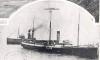 Petriana, 28 November 1903Australia’s first recorded major oil spill occurred on Saturday 28 November 1903 in Port Phillip Bay.Last updated: 11/09/2020
- Consultation—Draft Marine Order 44—(Safe containers) 2019Consultation on Marine Order 44 closed on 1 March 2019.Last updated: 11/29/2024
- Exemption 03 - Marine Safety (Certificates of operation)This exemption allows owners of certain vessels to operate without a certificate of operation, or without meeting a condition on a certificate of operation.Last updated: 04/20/2026
- Exemption 04 - Marine Safety (Recreational use)This exemption is for owners of domestic commercial vessels (DCVs) who may wish to operate their vessels for recreational purposes.Last updated: 12/23/2025
- Survey Matters – March 2025In this edition we talk about marine surveyor accreditation renewals, a marine safety incident and a safety recall notice.Last updated: