AMSA Connect phone services may have longer wait times on Monday 1 June 2026 while we operate with reduced staffing due to the Reconciliation Day Public Holiday in Canberra. Our search and rescue team will continue to operate during this time.

Showing 541 - 560 of 889 results for WA 0812 2782 5310 Biaya Buat Interior Rumah Type 90 Murah Serengan Solo
- Marine navigation (regulatory functions) levy (RFL)The RFL applies to most sea-going vessels operating in Australia. It helps fund the cost of safety activities, such as vessel inspections and surveys.Last updated: 12/04/2025
 Certificate of competency is non-negotiable for domestic commercial vessel operatorsDomestic commercial vessels must have the right certificates of competency to operate. Check you have the required certificates and make sure your details are up to date.Last updated: 04/02/2025
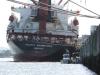 Pacific Adventurer, 11 March 2009The cargo ship Pacific Adventurer lost upwards of 270 tonnes of heavy fuel oil when holed on its port side while en route to Brisbane from Newcastle.Last updated: 11/09/2020
- Identification of oil on water—aerial observation and identification guideAssists in aerial observation, surveillance and identification of pollution to more accurately report the presence of oil in the marine environment.Last updated: 02/17/2022
- Exemption 40 (Operational area) Determination —Schedule 2This map displays the specified Class 2C restricted or Class 3C restricted areas in Queensland.Last updated: 11/09/2020
- Memorandum of understanding with the International Maritime OrganizationWe have a memorandum of understanding (MOU) with the International Maritime Organization (IMO).Last updated: 03/23/2023
- Compliance and enforcement policy 2012This policy has been superseded by the 2018 Compliance and enforcement policy.Last updated: 03/15/2021
- Memorandum of understanding with state and territory WHS regulatorsWe have a joint memorandum of understanding (MOU) with state and territory work health and safety (WHS) regulators. The MOU supports worker safety at sea.Last updated: 02/28/2024
- Safety management system workshop – Airlie BeachOn Wednesday 2 August AMSA will be hosting a Safety Management System workshop in Airlie Beach.Last updated: 08/03/2023
- Passenger vessel collision with unseen submerged rockA passenger vessel collided with an unseen rock, resulting in the injury of a passenger. The master navigated the vessel into unfamiliar waters that was not a normal or planned part of the passenger tour experience, and not authorised by the tour company. Owners and operators should ensure masters continue to conform to the planned or authorised route for the services they offer.Last updated: 12/20/2023
- Exemption 40 (Operational area) Determination—Schedule 5, Figure 3This map displays the specified areas for Class 2C restricted or Class 3C restricted vessels greater than 5.5 metres and less than 12 metres in Tasmania.Last updated: 01/29/2025
 Revised Marine Order 28 to commence 1 September 2025The revised Marine Order 28 (Operations standards and procedures) 2025 willcome into effect on 1 September 2025.Last updated: 07/07/2025
 United Nations World Oceans Day 2024 is Saturday 8 JuneWe are celebrating World Oceans Day 2024: Catalyzing action for our ocean and climate.Last updated:
- Safety guidelines for marine adventure tourism operatorsA guide to help domestic commercial marine adventure tourism operators develop their safety management systems (SMS)Last updated: 10/25/2023
- Who we work withWe contribute to the continuous improvement and development of maritime safety, environmental management, and emergency response systems in our region and globally. To do this, we collaborate with stakeholders and agree ways of working together through memoranda of understanding, intergovernmental agreements, and interagency agreements.Last updated: 04/18/2019
- International (STCW) qualificationsFind out how to apply for, renew or manage your STCW international certificate to work on Australian-registered vessels in international waters. Includes training, exemptions and recognition of overseas qualifications.Last updated: 08/20/2025
- Order free AMSA publicationsUse this form to order AMSA brochures, MARPOL placards and stickers, free of charge.Last updated: 01/10/2024
- Automatic identification systems on offshore structuresWe are responsible for ensuring there is a consistent approach to the use of AIS on offshore structures and facilities. Find out what we will ask you when you apply.Last updated: 09/30/2024
- Focused inspection campaign—planned maintenanceThe campaign will apply to foreign flagged ships and Regulated Australian Vessels (RAVs) arriving at Australian ports.Last updated: 10/26/2023
- Container weight verificationAccurate weight declaration for cargo containers is a critical safety issue. Shippers must provide a verified gross mass for containers.Last updated: 07/16/2025