AMSA Connect phone services will be closed for the public holiday on Monday 8 June 2026, reopening on Tuesday 9 June 2026. Our search and rescue team will continue to operate during this time.

Showing 741 - 760 of 971 results for WA 0812 2782 5310 Jasa Desain Kitchen Set Ukuran 2 Meter Profesional Tanon Sragen
- Poor risk assessment contributes to charter vessel running agroundA charter vessel with passengers was conducting a cruise around Sydney Harbour when it narrowly missed an unlit runabout at night. The vessel ran aground, and two attempts to tow the vessel off the sandbank were unsuccessful. The investigation found that the master did not risk-assess the route and respective conditions. The vessel safety management system provided the master with no clear direction on safe routes to follow. The command, control, and communication with and between the crew in relation to emergency procedures and response was ineffective.Last updated: 05/30/2025
- Port State control report 2018This report summarises our port State control activities and reports on the performance of commercial shipping companies, flag States and Classification Societies for the 2018 calendar year.Last updated: 03/12/2020
- Marine Order 97 (marine pollution prevention – air pollution) ReissueConsultation Report – October 2022Last updated: 12/06/2022
- Fatigue contributing to fishing vessel groundingOn 19 November 2020, a class 3B fishing vessel grounded on a beach after the master and two deckhands, fell asleep. The investigation identified that there was no clear procedure for standing watch. Fatigue also contributed to the poor decisions made by the crew around who was supposed to be on watch that morning.Last updated: 06/28/2022
- myAMSA help and feedbackFind out who to contact for help with myAMSA, and provide feedback on your experience.Last updated:
- Scale G first aid kitsSurvey vessels in these classes are required to carry a Scale G first aid kit on board: 1D (with unberthed passengers), 1E (with unberthed passengers), 2D, 2E, 3D and 3E.Last updated: 12/23/2025
- Intergovernmental agreements with Australia and other governmentsWe have intergovernmental agreements with state and territory governments in Australia.Last updated: 03/27/2023
- Unrestricted Pilot Licence(1) The criteria for issue to a person of an unrestricted pilot licence, for a stated pilotage area, are that the person:Last updated: 07/14/2022
- Spatial data gatewayWe provide a range of geographic information as digital maps and spatial data sets. This visual geographic data is used to support search and rescue, pollution response, vessel tracking, and navigation in Australian waters. Some data access may require you to pay a fee.Last updated: 08/06/2020
- Consultation—Draft Marine Order 44—(Safe containers) 2019Consultation on Marine Order 44 closed on 1 March 2019.Last updated: 11/29/2024
- MARPOL Annex V exceptions and penaltiesThere are few exceptions to the prohibition of garbage discharge under MARPOL. Breaches can result in significant penalties.Last updated: 11/14/2023
- Recognition of New Zealand international qualificationsYour New Zealand seafarer qualifications allow you to gain a Certificate of recognition for your qualification in Australia.Last updated: 01/20/2023
- Risk reportsThe National Plan uses a risk based approach to reduce the impact of maritime environment emergencies.Last updated: 11/09/2020
- Maritime Labour Convention—2019 Annual ReportThis report presents an analysis of Maritime Labour Convention (MLC) complaints, compliance and follow up actions undertaken in Australia.Last updated: 01/11/2024
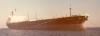 World Encouragement, 10 September 1979At 8.55 am on 10 September 1979, the tanker World Encouragement was conducting berthing operations at an Australian Oil Refinery (AOR) mooring at Kurnell in Botany Bay, New South Wales, when oil began rising to the water surface from beneath the ship.Last updated: 11/09/2020
- Compliance and enforcement policy 2012This policy has been superseded by the 2018 Compliance and enforcement policy.Last updated: 03/15/2021
- Port State control Australia—2019 reportThis report summarises the PSC activities of AMSA, detailing the performance of commercial shipping companies, flag States and Classification Societies for the 2019 calendar year.Last updated: 05/26/2020
- About the automatic identification systemFind out about the automatic identification system (AIS).Last updated: 07/30/2020
- Engine International Air Pollution Prevention (EIAPP) certificates and Technical FilesTo confirm an engine with a power output of greater than 130 kilowatts (kW) is compliant with nitrogen oxide (NOx) emission standards, it must be accompanied by an Engine International Air Pollution Prevention (EIAPP) certificate and supporting Technical File.Last updated: 12/13/2023
- Replace an international certificateReplace your lost or damaged certificate, or get a new certificate after updating your personal details.Last updated: 10/27/2020