AMSA Connect phone services may have longer wait times on Monday 1 June 2026 while we operate with reduced staffing due to the Reconciliation Day Public Holiday in Canberra. Our search and rescue team will continue to operate during this time.
Showing 541 - 560 of 832 results for WA 0859 3970 0884 Harga Kitchen Set Desain Minimalis Berkualitas Serengan Surakarta
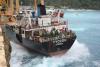 MV Tycoon, 9 January 2012On Sunday 9 January 2012, the cargo vessel the MV Tycoon broke free from its mooring at Flying Fish Cove, Christmas Island, and washed against the seawall and nearby cliff face. The ship had been loading phosphate at the time of the incident.Last updated: 11/09/2020
- Engine International Air Pollution Prevention (EIAPP) certificates and Technical FilesTo confirm an engine with a power output of greater than 130 kilowatts (kW) is compliant with nitrogen oxide (NOx) emission standards, it must be accompanied by an Engine International Air Pollution Prevention (EIAPP) certificate and supporting Technical File.Last updated: 12/13/2023
- Combined Masters, Deck and Engineer officer’s revalidation course syllabus—MT09Details about the Registered training organisation delivered revalidation courses for Masters, Deck and Engineer officers.Last updated: 11/09/2020
- Bunker fuel weathering studyIntentional and illegal discharge of bunker fuel oil and waste oils at sea from vessels is the most common type of oil spill investigated by Australian regulatory agencies.Last updated: 11/14/2023
- Your safety equipmentThe safety and medical equipment you need will depend on your vessel and operation.Last updated: 12/23/2025
- NP–GUI–001: Deployment of National Plan equipmentThis guidance sets out the considerations and processes to be observed when seeking the deployment of National Plan equipment for a marine pollution incident.Last updated: 03/18/2024
- Guidance for Marine order 47 (Offshore industry units)This guidance assists the offshore oil and gas industry in understanding the intent of marine order 47 (Offshore industry units), made under the Navigation Act 2012.Last updated: 04/29/2021
- Our approach to compliance for the national lawOur approach to comply with the Marine Safety (Domestic Commercial Vessel) National Law 2012 from 1 July 2018 to 30 June 2019.Last updated: 10/27/2020
 Career opportunities for graduates and studentsLaunch your career with AMSA.Last updated: 03/06/2025
- Shen Neng 1, 3 April 2010On 3 April 2010, the Shen Neng 1 was traversing a well-known shipping route south of the Douglas Shoal when it ran aground 38 nautical miles east of Great Keppel Island at about 5.30 pm.Last updated: 11/09/2020
- Approach to regulatory action against certificates of competencyThe National Law places obligations on maritime operators and other parties to ensure safety of persons and vessels and protection of the marine environment.Last updated: 12/28/2022
- Nearest land under MARPOLYou must be a specific distance from the nearest land before a discharge at sea can be made.Last updated: 08/13/2020
- Policies and requirements for registered training organisations delivering international certification trainingFind policies and requirements for registered training organisations to obtain AMSA approval for International Convention on Standards of Training, Certification and Watchkeeping for Seafarers (STCW) training.Last updated: 10/27/2020
- Satellite-Based Augmentation System (SBAS)A Satellite-Based Augmentation System (SBAS) is now available in the Australia and New Zealand region.Last updated: 09/18/2023
- NP-GUI-016: National Plan maritime discharges of oil and oily water during emergency and response situationsDischarges into the sea from a vessel of oil, oily water, decant water, or water emanating from an oily water separator is strictly regulated under Australian maritime law.Last updated: 03/18/2024
- How flag State administration works in AustraliaAs a flag State, AMSA are responsible for making sure Australian ships comply with relevant legislation/s.Last updated: 04/14/2025
- Marine levy payment portalPayment options for marine levies, fees, or charges.Last updated: 10/01/2025
- Response to the Iron Baron oil spill—report of the review groupFollowing the oil spill at Port Stanvac in South Australia on 28 June 1999, an inquiry was undertaken to investigate the reason for the spill and whether any corporation or individuals were responsible and should be prosecuted.Last updated: 11/09/2020
- Cargo marine orders and publicationsYour vessel may be inspected to verify your compliance with cargo requirements. These requirements and regulations apply to safety-related aspects for marine carriage of cargo.Last updated: 03/29/2021
- Our approved engineer cadet program—MT08The content of the Engineer cadet program including certificate and short courses, qualifying sea service and medical fitness.Last updated: 10/28/2020