
On this page:
- Guidance for
- Our role
- Why do we investigate?
- What you can expect in an investigation
- How we use investigation findings
- Fact sheet
- Disclaimer
Guidance for
- Domestic commercial vessel (DCV) owner/operators
- Regulated Australian vessel (RAV) owner/operators
- Foreign flagged vessel owner/operators
Our role
We are responsible for administering and enforcing a range of maritime safety and environmental protection laws.
Our investigations help keep the shipping and domestic commercial vessel sector safe by:
- understanding incidents
- supporting operators
- improving safety practices.
Most investigations do not lead to enforcement action, and operators can expect professionalism, clarity, and fairness throughout the process.
Why do we investigate?
We may investigate after:
- a marine incident
- a report of possible non-compliance
- an inspection
- an audit
- receiving intelligence.
We investigate to understand what happened, why it happened and what should change to prevent it happening again.
As the regulator, we investigate to determine whether maritime safety and environmental protection laws have been complied with and whether compliance or enforcement action is required. We look for opportunities to improve safety and environmental outcomes, as well as enhance the effectiveness of safety education initiatives.
Note: AMSA does not conduct ‘no blame’ safety investigations. ‘No blame’ safety investigations may be conducted by an authority other than AMSA (for example, the Australian Transport Safety Bureau).
What you can expect in an investigation
Who investigates
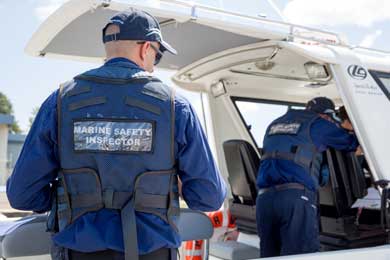
A marine incident investigation may be carried out by:
- AMSA staff
- our compliance partners from other state, territory, or Australian Government agencies on our behalf.
All investigating staff will have the appropriate authorisations and will carry photographic identification. The identification will state the powers that can be exercised.
What to expect from our investigators
You can expect that our investigators will:
- act professionally and respectfully and explain the purpose of the investigation
- ensure that you are aware of your rights and obligations including:
- when you're required to answer questions or produce documents
- when you're not required to respond or answer questions.
- gather relevant information and evidence, keep information secure and handle it in line with legal requirements
- provide a point of contact for questions about the investigation process.
What we expect from you
You're expected to:
- provide accurate and complete information
- respond to reasonable requests promptly
- preserve relevant records and documents
- tell the investigator if you have any concerns about the process.
What happens during an investigation
Every investigation is different. The steps we take will depend on the nature and complexity of the matter. However, an investigation will generally involve:
- Assessment - we assess available information to determine whether further action is appropriate, including an assessment of whether a full investigation is warranted.
- Information gathering - an investigator gathers relevant information and evidence. This may include documents and records, photographs, vessel information or other material.
- Interviews and enquiries - an investigator may speak with people involved in the incident, witnesses or others with relevant information. This may include vessel owners, operators, masters, crew members and other stakeholders.
- Review and analysis - we review the information gathered to establish the facts and identify any breaches of maritime safety and environmental protection laws.
- Outcome and decision-making - once the investigation is complete, we review the information and evidence to determine whether action is needed. Outcomes include:
- no further action
- education or guidance
- compliance or enforcement action
- referral to the Commonwealth Director of Public Prosecutions.
Not every investigation identifies a breach of the law. Not every breach results in enforcement action.
How long investigations take
The duration of an investigation depends on a range of factors including:
- the complexity of the matter
- the availability of information
- the number of parties involved.
While AMSA aims to progress investigations as efficiently as possible, some matters may take longer to ensure that all relevant information is considered.
How we use investigation findings
We may use the findings from investigations to:
- inform our understanding of risk and the safety and compliance culture in the commercial vessel industry
- inform industry education and awareness programs, and changes to regulatory instruments or standards
- add to our existing data for ongoing analysis.
We may publish the findings of investigations in:
- education materials for the domestic commercial vessel sector, such as safety lessons
- the Maritime Safety Awareness Bulletin for the shipping sector
- our statistical reports including annual marine incident reports (for foreign flagged and Australian ships and domestic commercial vessels), port State control annual reports and domestic incident reports.
Fact sheet
If you are contacted by an investigator, they may give you this sheet with their contact details.
Disclaimer
The information on this web page is general in nature and is provided as a guide only. It does not replace, limit or otherwise affect the operation of applicable legislation, or AMSA’s policies and procedures, and should not be relied on as legal advice.
The steps taken in any particular investigation may vary from those described in this fact sheet where appropriate to the circumstances.