AMSA Connect phone services may have longer wait times on Monday 1 June 2026 while we operate with reduced staffing due to the Reconciliation Day Public Holiday in Canberra. Our search and rescue team will continue to operate during this time.

Showing 1 - 20 of 804 results for WA 0859 3970 0884 Harga Borong Tenaga Pasang Plafon PVC Elegan Mewah Girimulyo Kulon Progo
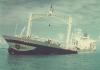 Oceanic Grandeur, 3 March 1970The oil spill from the Oceanic Grandeur in Torres Strait in March 1970 highlighted Australia’s lack of preparedness at the time to deal with a major oil spill in the marine environment.Last updated: 11/09/2020
 Cape Byron Lighthouse Heritage Management PlanCape Byron Lighthouse has a heritage management plan to protect and manage this historic property.Last updated: 10/02/2023
- Paying an infringement penaltyIf you have been issued with an infringement notice, you have 28 days to pay the infringement penalty or contact us about your payment options.Last updated: 02/11/2025
- Oceans of change for TongaWe celebrated Hulita Lamasialeva Fa’anunu’s achievements on World Maritime Day last year. She embodied the 2019 theme—empowering women in the maritime community.Last updated: 05/03/2022
 Focused inspection campaign—passenger tender vessel safety (WA/NT only)Advice to vessel owners and masters for the Focused Inspection Campaign (FIC) on passenger (class 1) vessel tenders in Western Australia and Northern Territory.Last updated: 08/30/2023
- Iron Baron, 10 July 1995On Monday 10 July 1995, the Iron Baron chartered bulk carrier grounded on Hebe Reef at the approach to the Tamar River, northern Tasmania at 7.30 pm EST.Last updated: 11/09/2020
- Safe and clean seas, saving livesLast updated: 02/09/2024
- Response to the Iron Baron oil spill—report of the review groupFollowing the oil spill at Port Stanvac in South Australia on 28 June 1999, an inquiry was undertaken to investigate the reason for the spill and whether any corporation or individuals were responsible and should be prosecuted.Last updated: 11/09/2020
- History of the National PlanOn 1 October 1973, the National Plan for Maritime Environmental Emergencies (National Plan) came into operation.Last updated: 10/03/2023
- Fatigue risk management plan: the default planThis plan sets out minimum rest periods, rest period dispensations and the monitoring procedures that must be observed by pilots under the default fatigue risk monitoring plan (FRMP). It also describes auditing and recording keeping requirements.Last updated: 08/05/2020
- Corporate plan 2024-25This corporate plan is prepared for the reporting period 2024–25 and covers the reporting periods 2024–25 to 2027–28. It considers future trends and potential changes to our operating environment.Last updated: 08/13/2024
- Corporate Plan 2008-11Last updated: 03/29/2021
- Corporate Plan 2015-19Last updated: 09/07/2020
- North-East Shipping Management Plan—action updateThe North-East Shipping Management Plan identifies actions based on information about the nature of shipping activity in the north-east region as well as the experience and knowledge of members of the North-East Water Space Management Working Group.Last updated: 08/06/2025
- North East Shipping Management Plan—July 2021 updateThe North-East Shipping Management Plan identifies actions based on information about the nature of shipping activity in the north-east region as well as the experience and knowledge of members of the North-East Water Space Management Working Group (NE WSM WG).Last updated: 04/14/2025
- Corporate plan 2024-25This corporate plan is prepared for the reporting period 2024–25 and covers the reporting periods 2024–25 to 2027–28. It considers future trends and potential changes to our operating environment.Last updated: 08/13/2024
- Garbage management planA garbage management plan is an effective way to reduce garbage generated on board and ensure its effective disposal, to protect our marine environment. Under Australian maritime legislation it is mandatory for certain vessels to carry a garbage management plan.Last updated: 08/13/2020
- Corporate Plan 2017-21Last updated: 11/09/2020
- Corporate plan 2022-23This corporate plan is prepared for the reporting period 2022–2023 and covers the reporting periods 2022–23 to 2025–26. It considers future trends and potential changes to our operating environment.Last updated: 08/23/2022
- Fatigue risk management planDCV operators: Learn how to develop a fatigue management plan. This is a requirement under the national law for Class 1, 2 and 3 vessels, including those eligible for a simplified SMS.Last updated: