
Showing 301 - 320 of 607 results for WA 0812 2782 5310 Jasa Borongan Plafon Akustik Board Tingkir Salatiga
- Is it a domestic commercial vessel?In Australia, domestic commercial vessels are regulated under the Marine Safety (Domestic Commercial Vessel) National Law Act 2012 (national law act). The National Law Act underpins the National System for Domestic Commercial Vessel Safety (national system).Last updated: 09/10/2025
- Laura D'Amato, 3 August 1999On 3 August 1999 the Laura D’Amato, a 96,121 DWT Italian registered oil tanker, was berthed alongside at the Shell Gore Bay terminal in Sydney discharging its cargo of Murban light crude oil.Last updated: 11/09/2020
 Dory vessel safetyOperators and crew of these types of operations face unique safety challenges and risk.Last updated: 08/14/2023
- Interagency agreements with other agenciesWe have interagency agreements with other agencies.Last updated: 03/21/2023
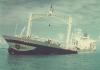 Oceanic Grandeur, 3 March 1970The oil spill from the Oceanic Grandeur in Torres Strait in March 1970 highlighted Australia’s lack of preparedness at the time to deal with a major oil spill in the marine environment.Last updated: 11/09/2020
- Eyesight and medical requirements for domestic certificatesHow to meet the medical requirements for domestic seafarer certificatesLast updated: 03/05/2024
- Consultation feedback report: Proposed changes to Marine Order 11 (Living and working conditions on vessels)Read a summary of results from the mid-2024 consultation on Marine Order 11 and download a copy of the full report.Last updated: 11/21/2024
- Maritime Safety Awareness Bulletin issue 2—mooring safetyThinking mooring safetyLast updated: 09/29/2021
- APL England container lossIn rough weather, early in the morning of 24 May, about 50 containers were lost overboard from the Singapore-flagged container ship APL England. Read our regular updates.Last updated: 08/29/2023
- Consultation feedback report—Maritime high frequency (HF) radiotelephone in AustraliaThis consultation feedback report is based on submissions to us via an online form and Facebook.Last updated: 11/14/2023
- Scale F first aid kitSurvey vessels in these classes are required to carry a Scale F first aid kit on board: 1B, 1C (with unberthed passengers), 1D (with berthed passengers), 1E (with berthed passengers), 2B, 2C, 3B and 3C.Last updated: 12/23/2025
- Safety Lessons from Marine Incident Investigation (AMSA Report) – No.4 – February 2022Towing of vessel in distress leads to back injuryLast updated: 05/09/2022
- Engineering qualifications for RAN seaman officers and ratingsHow to get a engineering qualifications recognized if you are a Royal Australian Navy (RAN) seaman officer.Last updated: 03/21/2025
- STCW regulations explainedThere are mandatory minimum requirements for your certificates under the International Convention on Standards of Training, Certification and Watchkeeping for Seafarers 1978 (STCW).Last updated: 10/27/2020
- MARPOL and its implementation in AustraliaThe International Convention for the Prevention of Pollution from Ships (MARPOL) is the main international convention for addressing ship sourced pollution.Last updated: 03/27/2025
- Maritime Safety Awareness Bulletin issue 1—working at heightsWorking at heightsLast updated: 09/29/2021
- Exercise Constant Bearing 2017 evaluation reportThe 2017 National Plan exercise ‘Exercise Constant Bearing’ was held in Adelaide, South Australia, from 5 to 7 December. A full overview of the exercise including evaluation insights and recommendations, can be found in this report.Last updated: 11/09/2020
- A guide to fishing vessel stability (booklet)A guide to help fishing vessel owners, operators and crew better understand how vessel stability works, and hazards to look out for.Last updated: 02/11/2026
- Sailing vesselsOur eligibility requirements for sailing vessels.Last updated: 07/01/2024
- Medical and first aid equipmentAll vessel owners need to do a risk assessment to work out what medical and first aid equipment to carry. Class 1, 2 and 3 survey vessels have minimum medical and first aid equipment they are required to carry.Last updated: 12/23/2025