
Showing 481 - 500 of 1213 results for WA 0852 2611 9277 Daftar Harga Pembuatan Wall Moulding Hijau Di Pamulang Kota Tangerang Selatan
- Safety Lessons from Marine Incident Investigation (Company Report) – No.2 – December 2021Master distraction leads to vessel grounding during sea trialsLast updated: 04/03/2023
- Survey regime consultationChanges to survey regime for domestic commercial vessels from 1 July 2018.Last updated: 09/15/2023
- Complex maritime emergencies workshopIn June 2018 our Response Division delivered a workshop in Melbourne which explored how Australia could deliver an effective response to a complex maritime emergency.Last updated: 10/28/2020
- Lack of regular planned maintenance results in engine fireA Class 1 passenger vessel’s port engine caught fire whilst northeast of Fraser Island with 82 passengers and crew onboard. The investigation found that regular planned engine maintenance, in accordance with manufacturer’s specifications, was not in place at the time of the incident. The crew’s response to the incident was immediate and effective. The transfer of the 77 passengers to a nearby vessel, which attended the distress call within 10 minutes, was undertaken quickly and effectively by the master and crew.Last updated: 08/29/2023
- 2024/06 - Engine power limitations on ships in coastal pilotage areasPurposeThis Marine Notice provides guidance about risks associated with the operation of engine power limiters (EPL) and similar power restriction systems onboard ships transiting AustraliLast updated: 01/10/2025
- Certificates of operation (CoO)If you own or operate a domestic commercial vessel in Australia, you are required to obtain a certificate of operation before you operate the vessel.Last updated: 05/30/2025
- 2023/01 — A Satellite-Based Augmentation System (SBAS) in the Australia and New Zealand regionThis marine notice informs shipowners, operators, masters and bridge watchkeepers of the availability of a Satellite-Based Augmentation System (SBAS) in the Australia and New Zealand region.Last updated: 01/10/2025
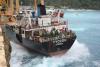 MV Tycoon, 9 January 2012On Sunday 9 January 2012, the cargo vessel the MV Tycoon broke free from its mooring at Flying Fish Cove, Christmas Island, and washed against the seawall and nearby cliff face. The ship had been loading phosphate at the time of the incident.Last updated: 11/09/2020
- Our approach to compliance for the national lawOur approach to comply with the Marine Safety (Domestic Commercial Vessel) National Law 2012 from 1 July 2018 to 30 June 2019.Last updated: 10/27/2020
- Shipping decarbonisation: feedback from industryFind out what was discussed at decarbonisation roundtables attended by shipping industry representatives. By hosting these roundtables, AMSA aims to foster collaboration in the Australian shipping industry as it transitions away from carbon-based fuels.Last updated: 12/04/2025
- Scale G first aid kitsSurvey vessels in these classes are required to carry a Scale G first aid kit on board: 1D (with unberthed passengers), 1E (with unberthed passengers), 2D, 2E, 3D and 3E.Last updated: 12/23/2025
- Marine Order 71 review: Consultation report October 2023This report provides an overview of the consultation process, key issues raised during public consultation and the key changes to the Marine Order.Last updated: 11/23/2023
- Consultation feedback report: International requirements on fishing gear marking and reportingThis feedback report summarises the results of our consultation on international requirements on fishing gear marking and reporting.Last updated: 04/05/2023
- Proof of identityProof of identity is required when applying for a certificate of competency or seafarer’s service book.Last updated: 11/13/2023
 Updated standard for wheelhouse visibility, escape, accommodation, and personal safetyOn 1 September 2025 the updated edition of the National Standard for Commercial Vessels (NSCV) Part C1 will be introduced. It will be mandatory for all new domestic commercial vessels from 1 September 2027.Last updated: 09/01/2025
- Tasmania—changes to domestic commercial vessel servicesMost services for operators and crew of domestic commercial vessels are now provided by us instead of Marine and Safety Tasmania.Last updated: 03/15/2021
- Scale F first aid kitSurvey vessels in these classes are required to carry a Scale F first aid kit on board: 1B, 1C (with unberthed passengers), 1D (with berthed passengers), 1E (with berthed passengers), 2B, 2C, 3B and 3C.Last updated: 12/23/2025
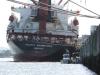 Pacific Adventurer, 11 March 2009The cargo ship Pacific Adventurer lost upwards of 270 tonnes of heavy fuel oil when holed on its port side while en route to Brisbane from Newcastle.Last updated: 11/09/2020
 Our teamsWe have diverse teams operating all around Australia.Last updated: 03/17/2026