Showing 121 - 140 of 538 results for WA 0859 3970 0884 Estimasi Biaya Renovasi Plafon Awan Minimalis Terpercaya Trucuk Klaten
- NP-GUI-016: National Plan maritime discharges of oil and oily water during emergency and response situationsDischarges into the sea from a vessel of oil, oily water, decant water, or water emanating from an oily water separator is strictly regulated under Australian maritime law.Last updated: 03/18/2024
- NP–POL–004: National Plan register of oil spill control agents for maritime response useUnder the National Plan for Maritime Environmental Emergencies, only those spill response chemicals, or oil spill control agents, listed on the National Plan register of oil spill control agents caLast updated: 03/18/2024
- NP-GUI-001A: Use of National Plan equipment by states and the Northern TerritoryHow to hire National Plan equipment and conditions of use.Last updated: 03/18/2024
- 2019 monthly domestic commercial vessel incident reportsThe information you provide in your incident report plays an important part in guiding the way we improve maritime safety for everybody on the water. By reporting marine incidents to us, you are also meeting your reporting obligations under Australian laws.Last updated: 05/09/2022
- NP–GUI–025: National Plan response, assessment and termination of cleaning for oil contaminated foreshoresStructured guidance for identifying when to stop the response to a maritime environmental emergency.Last updated: 03/18/2024
- Intergovernmental agreement on the National Plan to combat pollution of the sea by oil and other noxious and hazardous substancesThis agreement sets out the plan for how Australia will respond to marine pollution spills in Australian waters.Last updated: 03/27/2023
- Make a disclosure or report internal misconductIf you suspect misconduct, fraud, or corruption involving AMSA officials, contractors or service providers, you should report it.Last updated: 08/05/2025
- 2023 monthly domestic commercial vessel incident reportsThe information you provide in your incident report plays an important part in guiding the way we improve maritime safety for everybody on the water. By reporting marine incidents to us, you are also meeting your reporting obligations under Australian laws.Last updated: 02/23/2024
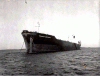 Princess Anne Marie, 14 July 1975On 14 July 1975 the Marine Operations Centre in Canberra was alerted that the oil tanker Princess Anne Marie had sustained a large crack in its hull approximately 300 miles off Western Australian.Last updated: 11/09/2020
- Western Australia fuel oil suppliersFind local suppliers of fuel oil in Western Australia.Last updated: 11/19/2025
- Search and rescue incidents 2017–18Our search and rescue incidents from 2017–18.Last updated: 10/26/2020
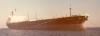 World Encouragement, 10 September 1979At 8.55 am on 10 September 1979, the tanker World Encouragement was conducting berthing operations at an Australian Oil Refinery (AOR) mooring at Kurnell in Botany Bay, New South Wales, when oil began rising to the water surface from beneath the ship.Last updated: 11/09/2020
- Practical lessons from person overboard incidentsIn this safety lesson, veteran trawl fisher Mark Millward explains what he has learned from involvement in person overboard incidents. Mark has operated in the Queensland East Coast and Torres Strait Prawn Trawl Fisheries for over 40 years.Last updated: 11/28/2024
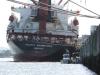 Pacific Adventurer, 11 March 2009The cargo ship Pacific Adventurer lost upwards of 270 tonnes of heavy fuel oil when holed on its port side while en route to Brisbane from Newcastle.Last updated: 11/09/2020
- Exercise Barossa—Adelaide 11 June 1998Exercise Barossa was a biannual oil spill response exercise conducted in Adelaide under our National Plan to Combat Pollution of the Sea by Oil and Other Noxious and Hazardous Substances.Last updated: 03/14/2025
- 2024 monthly domestic commercial vessel incident reportsThe information you provide in your incident report plays an important part in guiding the way we improve maritime safety for everybody on the water. By reporting marine incidents to us, you are also meeting your reporting obligations under Australian laws.Last updated: 01/28/2025
- AMSA BoardOur Board is appointed by the Minister for Infrastructure, Transport, Regional Development and Local Government.Last updated: 09/18/2025
- Trawler inpull winch reduces risk of person overboardThis safety lesson describes how experienced Queensland prawn trawl fisher, Tony Sterling, developed an inpull winch that pulls in both sides of the trawl gear at the same time. The winch has delivered major safety benefits because crew no longer need to go out onto the booms.Last updated: 08/29/2024
- Landing barge capsizes after exceeding maximum weight limit in vessel stability book (safety lesson)On 21 August 2019, a landing barge (operated as a Class 1E and 2D) capsized while transiting from Great Mackerel Beach to Pittwater north of Sydney.Last updated: 12/22/2025
- DCV Safety Alert 03/2023 – Recommendations from the investigation into the fire and loss of the passenger vessel ConceptionThis safety alert provides guidance to operators of domestic commercial vessels (DCVs) on risks associated with safety management systems inadequately considering electrical systems and other potential fire hazards.Last updated: 12/04/2024