AMSA Connect phone services may have longer wait times on Monday 1 June 2026 while we operate with reduced staffing due to the Reconciliation Day Public Holiday in Canberra. Our search and rescue team will continue to operate during this time.

Showing 141 - 160 of 1125 results for WA 0812 2782 5310 Biaya Pemasangan Interior Dapur Dan Kamar Mandi Minimalis Ceper Klaten
 Brisbane VTS’s timely intervention earns nomination for 2019-20 Australian VTS AwardThe inaugural Australian VTS Award saw Brisbane VTS operators Todd Stewart and Ricky Blake commended for their actions, which had a profound impact on the outcome of two men and a young boy lost at sea.Last updated: 10/04/2024
- Marine order changesThis page contains a list of past changes to Marine Orders and International Maritime Organization (IMO) resolutions.Last updated: 03/13/2025
- Safety equipment guides for surveyed vesselsFind safety equipment guides for class 1, 2 and 3 vessels that hold a certificate of survey.Last updated: 12/21/2023
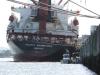 Pacific Adventurer, 11 March 2009The cargo ship Pacific Adventurer lost upwards of 270 tonnes of heavy fuel oil when holed on its port side while en route to Brisbane from Newcastle.Last updated: 11/09/2020
- My BoatUse the My Boat online system to understand and comply with safety requirements, legislation and standards for your domestic commercial vessel.Last updated: 10/29/2018
- Updated NOPSEMA publicationsNOPSEMA has been working with state authorities to improve and streamline consultation practices within the offshore petroleum industry, and provide advice on regulatory requirements for offshore petroleum activities.Last updated: 11/14/2023
- Transporting livestock from AustraliaOperators of Regulated Australian Vessels (RAV) and Foreign Vessels, as well as the shippers of livestock, have obligations when loading and transporting livestock from Australia.Last updated: 01/04/2024
 Former South Australia police officer helps save maritime livesWatch the video of Mark Jacobs who has hung up his snorkel and fins to help save lives across 10 per cent of the Earth’s surface.Last updated: 05/03/2022
- Search and rescue incidents 2016–17Our search and rescue incidents from 2016–17.Last updated: 10/26/2020
- 2015/15 — Free-fall lifeboat safetyAlerts the maritime industry to findings of two recent accident investigations conducted by the Australian Transport Safety Bureau and the New Zealand Transport Accident Investigation Commission.Last updated: 01/10/2025
 HF radiotelephone monitoring in AustraliaFrom 1 January 2022, AMSA will provide 24-hour nationwide monitoring of high frequency (HF) radiotelephone distress, urgency and safety communications in Australia.Last updated: 12/17/2021
- Approved training coursesWe have approved these courses if you want to qualify for a certificate under international training conventions.Last updated: 01/23/2026
- Deficiency notice codesA deficiency notice uses codes to show non-compliance found during a Port State control (PSC) inspection.Last updated: 08/07/2023
- Regulatory plan—completed program 2017–18This program of regulatory activities was completed during the 2017–2018 financial year.Last updated: 09/22/2020
- How Australian seafarers use task booksIf you are an Australian seafarer, you can use an AMSA approved task book to record your sea service, training and experience on board a vessel.Last updated: 12/28/2022
- Migration skills assessment for marinersIf you’re a seafarer or marine surveyor and want to apply for a skilled visa to live and work in Australia, you may need a migration skills assessment. Find out what you need to do and how to apply.Last updated: 05/07/2025
 Esso Gippsland, 22 January 1982On 22 January 1982 at approximately 9 pm, the oil tanker Esso Gippsland was in the process of loading at Port Stanvac jetty, South Australia, when a large quantity of industrial fuel oil leaked from the air vent and ullage port of its no.2 starboard tank.Last updated: 11/09/2020
- Safe crewing (manning) for regulated Australian vesselsAll regulated Australian vessels must have a minimum safe crewing determination (MSCD). Find out how to prepare your crewing arrangement, check qualifications, and submit your application or renewal.Last updated: 09/25/2025
 Consultation feedback report now available: Changes to safety management system requirementsThe report outlining the feedback from the recent consultation on proposed changes to Marine Order 504 (Certificates of operation and operation requirements – national law) 2018 (Marine Order 504)Last updated: 02/29/0024
- Speed and visibility play part in vessel collisionA charter vessel transiting between research sites at night collided with a stationary vessel. The stationary vessel’s master claimed to have an anchor light on, but the crew of the charter vessel stated they did not see any navigation lights. The master of the stationary vessel was preparing food on the vessel at the time and may have obstructed the anchor light view from the charter vessel’s crew. The master of the charter vessel was found to have been operating at high speed given the conditions (night operations). This also rendered the lookout ineffective.Last updated: 09/25/2023