AMSA Connect phone services may have longer wait times on Monday 1 June 2026 while we operate with reduced staffing due to the Reconciliation Day Public Holiday in Canberra. Our search and rescue team will continue to operate during this time.
Showing 1 - 20 of 976 results for WA 0859 3970 0884 Anggaran Dana Renovasi Shunda Plafon Ruang Tamu Muntilan Kab Magelang
- Spatial dataWe provide access to spatial data that supports maritime and aviation safety activities and protection of the marine environment. You can download selected data sets, and request customised products and spatial analysis.Last updated: 11/17/2017
- Spatial data gatewayWe provide a range of geographic information as digital maps and spatial data sets. This visual geographic data is used to support search and rescue, pollution response, vessel tracking, and navigation in Australian waters. Some data access may require you to pay a fee.Last updated: 08/06/2020
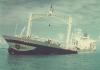 Oceanic Grandeur, 3 March 1970The oil spill from the Oceanic Grandeur in Torres Strait in March 1970 highlighted Australia’s lack of preparedness at the time to deal with a major oil spill in the marine environment.Last updated: 11/09/2020
- Fuel oil consumption dataAll ships of 5,000 gross tonnage and above engaged in international voyages must collect data on fuel consumption, distance travelled and hours underway.Last updated: 11/07/2024
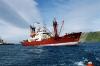 Nella Dan, 3 December 1987On 3 December 1987 the Nella Dan ran aground in strong winds in Buckle Bay, Macquarie Island.Last updated: 11/09/2020
 Focused inspection campaign—passenger tender vessel safety (WA/NT only)Advice to vessel owners and masters for the Focused Inspection Campaign (FIC) on passenger (class 1) vessel tenders in Western Australia and Northern Territory.Last updated: 08/30/2023
- Vessel track data disclosure and dissemination policyThe purpose of this policy is to outline the underlying principles for the disclosure and dissemination of vessel tracking information under agreed conditions.Last updated: 01/21/2021
- History of the National PlanOn 1 October 1973, the National Plan for Maritime Environmental Emergencies (National Plan) came into operation.Last updated: 10/03/2023
- Fatigue risk management plan: the default planThis plan sets out minimum rest periods, rest period dispensations and the monitoring procedures that must be observed by pilots under the default fatigue risk monitoring plan (FRMP). It also describes auditing and recording keeping requirements.Last updated: 08/05/2020
 North-East Shipping Management PlanThe North-East Shipping Management Plan aims to give Australians confidence in how the growth of shipping area is managed concomitant with growth in commodity flows and associated infrastructure such as ports.Last updated: 01/20/2021
- Corporate plan 2024-25This corporate plan is prepared for the reporting period 2024–25 and covers the reporting periods 2024–25 to 2027–28. It considers future trends and potential changes to our operating environment.Last updated: 08/13/2024
- Corporate Plan 2008-11Last updated: 03/29/2021
- Corporate Plan 2015-19Last updated: 09/07/2020
- Fatigue risk management planDCV operators: Learn how to develop a fatigue management plan. This is a requirement under the national law for Class 1, 2 and 3 vessels, including those eligible for a simplified SMS.Last updated:
- Corporate Plan 2017-21Last updated: 11/09/2020
- Corporate plan 2022-23This corporate plan is prepared for the reporting period 2022–2023 and covers the reporting periods 2022–23 to 2025–26. It considers future trends and potential changes to our operating environment.Last updated: 08/23/2022
- Corporate plan 2024-25This corporate plan is prepared for the reporting period 2024–25 and covers the reporting periods 2024–25 to 2027–28. It considers future trends and potential changes to our operating environment.Last updated: 08/13/2024
- National Plan trainingUnder the National Plan, training is available for responders. These training courses make sure Commonwealth, state and territory responders are familiar with the national arrangements under which they work together in a maritime emergency.Last updated: 08/20/2025
- Garbage management planA garbage management plan is an effective way to reduce garbage generated on board and ensure its effective disposal, to protect our marine environment. Under Australian maritime legislation it is mandatory for certain vessels to carry a garbage management plan.Last updated: 08/13/2020
- Annual Regulatory Plan 2017–18Our regulatory plan provides details of planned changes to our regulatory instruments such as Marine Orders and the National Standard for Commercial Vessels, to make it easier for business and the community to take part in the development of those instruments.Last updated: 07/13/2022