AMSA Connect phone services may have longer wait times on Monday 1 June 2026 while we operate with reduced staffing due to the Reconciliation Day Public Holiday in Canberra. Our search and rescue team will continue to operate during this time.

Showing 1 - 20 of 624 results for WA 0859 3970 0884 Total Biaya Renovasi Plafon PVC United Berpengalaman Tempel Sleman
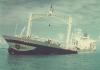 Oceanic Grandeur, 3 March 1970The oil spill from the Oceanic Grandeur in Torres Strait in March 1970 highlighted Australia’s lack of preparedness at the time to deal with a major oil spill in the marine environment.Last updated: 11/09/2020
 United Nations World Oceans Day 2024 is Saturday 8 JuneWe are celebrating World Oceans Day 2024: Catalyzing action for our ocean and climate.Last updated:
- Engineering qualifications for RAN seaman officers and ratingsHow to get a engineering qualifications recognized if you are a Royal Australian Navy (RAN) seaman officer.Last updated: 03/21/2025
 Focused inspection campaign—passenger tender vessel safety (WA/NT only)Advice to vessel owners and masters for the Focused Inspection Campaign (FIC) on passenger (class 1) vessel tenders in Western Australia and Northern Territory.Last updated: 08/30/2023
- Safe and clean seas, saving livesLast updated: 02/09/2024
- Correct use of Hydrostatic Release UnitsSafety Alert: 02/2021 aims to raise awareness of correct use of hydrostatic release units, for both float-free life rafts and float-free EPIRBS.Last updated: 12/22/2023
- Marine order 47—Offshore industry unitsLast updated: 02/21/2025
- Chief mate and Master certificate of competency for Royal Australian Navy seaman officerIf you are serving or have served in the Royal Australian Navy (RAN) as a Maritime Warfare Officer, this information explains how to qualify for an International Convention on Standards of Training, Certification and Watchkeeping for Seafarer (STCW) certificate of competency for a: Chief mate Master less than 3000 GT MasterLast updated: 07/11/2024
- Guidance for Marine order 47 (Offshore industry units)This guidance assists the offshore oil and gas industry in understanding the intent of marine order 47 (Offshore industry units), made under the Navigation Act 2012.Last updated: 04/29/2021
- History of the National PlanOn 1 October 1973, the National Plan for Maritime Environmental Emergencies (National Plan) came into operation.Last updated: 10/03/2023
 International safety alert: rise in cargo transport unit structural failures on shipsWe have issued a safety alert to raise awareness of the structural and stowage requirements for shipping containers and other cargo transport units (CTUs) in Australian ports.Last updated:
- Fatigue risk management plan: the default planThis plan sets out minimum rest periods, rest period dispensations and the monitoring procedures that must be observed by pilots under the default fatigue risk monitoring plan (FRMP). It also describes auditing and recording keeping requirements.Last updated: 08/05/2020
- Corporate Plan 2008-11Last updated: 03/29/2021
- Corporate Plan 2015-19Last updated: 09/07/2020
- Corporate plan 2024-25This corporate plan is prepared for the reporting period 2024–25 and covers the reporting periods 2024–25 to 2027–28. It considers future trends and potential changes to our operating environment.Last updated: 08/13/2024
- Garbage management planA garbage management plan is an effective way to reduce garbage generated on board and ensure its effective disposal, to protect our marine environment. Under Australian maritime legislation it is mandatory for certain vessels to carry a garbage management plan.Last updated: 08/13/2020
- Corporate plan 2024-25This corporate plan is prepared for the reporting period 2024–25 and covers the reporting periods 2024–25 to 2027–28. It considers future trends and potential changes to our operating environment.Last updated: 08/13/2024
- Corporate Plan 2017-21Last updated: 11/09/2020
- Corporate plan 2022-23This corporate plan is prepared for the reporting period 2022–2023 and covers the reporting periods 2022–23 to 2025–26. It considers future trends and potential changes to our operating environment.Last updated: 08/23/2022
- Fatigue risk management planDCV operators: Learn how to develop a fatigue management plan. This is a requirement under the national law for Class 1, 2 and 3 vessels, including those eligible for a simplified SMS.Last updated: