
In 2026, Australia marks 50 years of nationally coordinated search and rescue, recognising the enduring collaboration between Commonwealth, state and territory agencies, industry and volunteers.
The Blythe Star disaster and first national conference
In 1973, the sinking of the Blythe Star highlighted the need for stronger national coordination, and the lessons from the tragedy helped shape important reforms to Australia's search and rescue arrangements.
In 1976 the first national search and rescue meeting was held in Melbourne. An annual national meeting has been held every year since 1976, on a rotational arrangement across all jurisdictions.
Over the years following that first meeting, search and rescue authorities across Australia began working more closely together, sharing knowledge, strengthening cooperation and building a more unified approach to saving lives.
This landmark collaboration laid the foundations for a coordinated national approach and evolved into today’s NATSAR Council.
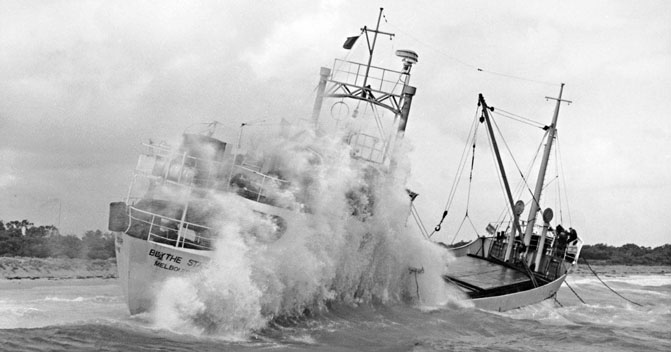
Learn more about the sinking of the Blythe Star, the bumbled search operation and its legacy and hear a personal account from a surviving crew member, Mick Doleman.
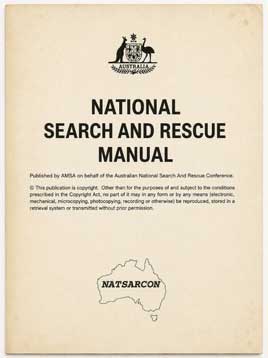
First national manual
In 1980, Australia published its first National Search and Rescue (SAR) Manual, issued by the Commonwealth Department of Transport as a single national reference outlining how authorities coordinate to find and rescue people in distress.
The manual provided a common doctrinal foundation across aviation and maritime domains and continues to be maintained and refined.
The manual continues today and incorporates land, maritime and aviation search and rescue best practice.
First satellite-aided rescues
In 1982, satellite distress-alerts beacons were used for the first time through the Cospas-Sarsat system.
This proved that emergency signals from ships, aircraft and individuals could be detected from space, marking the beginning of a new era in global search and rescue.
The Cospas-Sarsat system is still in use today and is a fundamental component of search and rescue communications.
1989
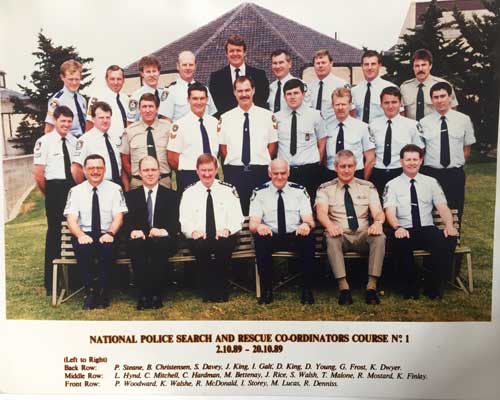
National Search and Rescue Managers Course established
In 1989, the first National Search and Rescue Managers Course was held at the NSW Police Academy.
In 2026, the 35th Manager’s Course was hosted by the Australian Federal Police.
The intent of the course is to develop and apply world’s best practice to management and planning of search and rescue coordination, in an environment which promotes interagency exchange of information and practices that align with the National Search and Rescue Manual.
National search and rescue awards established
In 1996, the first Australian Search and Rescue Award was presented, recognising an extraordinary nighttime rescue of three men from a sinking vessel in Bass Strait.
This established a national program to honour courage, skill and cooperation in search and rescue.
The Australian Search and Rescue Awards have been expanded since 1996, and now include four categories: Professional, Professional Volunteers, Non-Professionals (also known as Public Responders) and Long Standing Commitment to Search and Rescue.

These are personalised with an inscription for awardees
Joint Rescue Coordination Centre established
In 1997, Australia brought aviation and maritime search and rescue together under the Joint Rescue Coordination Centre (JRCC Australia) within the Australian Maritime Safety Authority (AMSA), creating a single, 24-hour national coordination centre for search and rescue operations across land, sea and air.
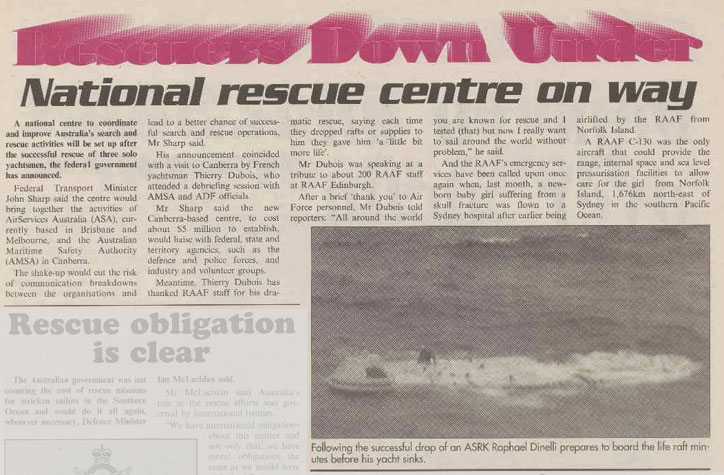
Sydney to Hobart disaster drives safety reforms
In 1998, a severe storm struck the Sydney to Hobart Yacht Race, triggering one of Australia’s largest and most complex peacetime maritime search and rescue operations.
Fifty five sailors were rescued, six lives were lost, and the tragedy led to major improvements in weather forecasting, communications and maritime safety.
NATSAR Council established
In 1999, Australia formally established the National Search and Rescue Council (NATSAR) as the peak body overseeing national SAR policy.
The NATSAR Council is a cooperative body that is responsible for national search and rescue response arrangements in Australia. The Council members are from the Australian Maritime Safety Authority, the Australian Defence Force and state, territory and federal police.
Global transition to 406 MHz distress beacons
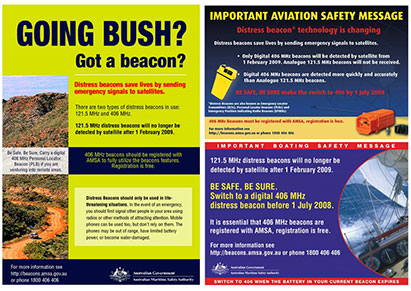
In 2009, satellite systems ceased monitoring older analogue emergency beacon signals and moved exclusively to digital 406 MHz beacons.
This significantly reduced false alerts and improved the speed and accuracy of SAR responses.
Bathymetric mapping and side scan sonar used for the MH370 search. Source: Geoscience Australia
MH370 search – largest aviation SAR operation in Australia’s history
In 2014, Australia led the search for Malaysia Airlines Flight MH370 after it disappeared over the Southern Indian Ocean.
This multinational effort became the largest aviation search and rescue operation in Australia’s history, spanning vast and remote ocean areas and driving advances in SAR coordination, satellite tracking and data analysis.
SARMAP adopted as a national search planning standard
In 2016, SARMAP was adopted as a standard search-planning tool across Australian SAR jurisdictions, enabling a consistent, evidence-based approach to drift modelling and search area definition.
Next-generation MEOSAR satellite capability becomes operational
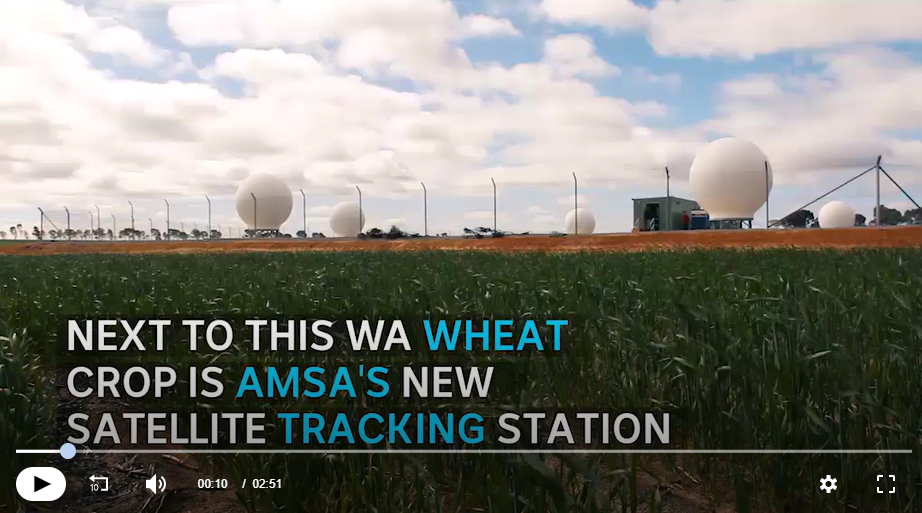
In 2016, next-generation satellite search and rescue technology (MEOSAR) became operational in Australia, including the ground station at Mingenew, Western Australia.
This enabled near real-time detection and location of distress beacons, significantly improving response times and survival outcomes.
Australian divers support Thai cave rescue
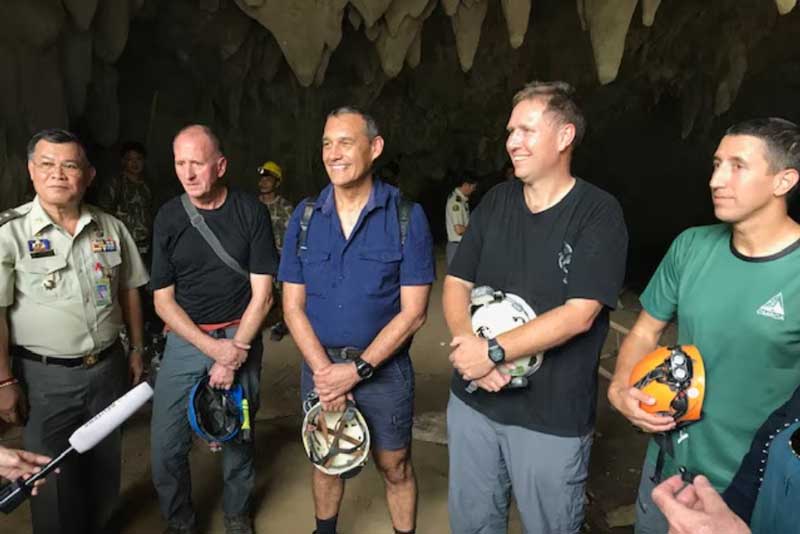
In 2018, Australian specialist divers played a key role in the international rescue of a youth football team trapped in a flooded cave system in Thailand.
Their contribution highlighted Australia’s advanced rescue capabilities and ability to support complex operations globally
Integration of drones (RPAS) into SAR operations
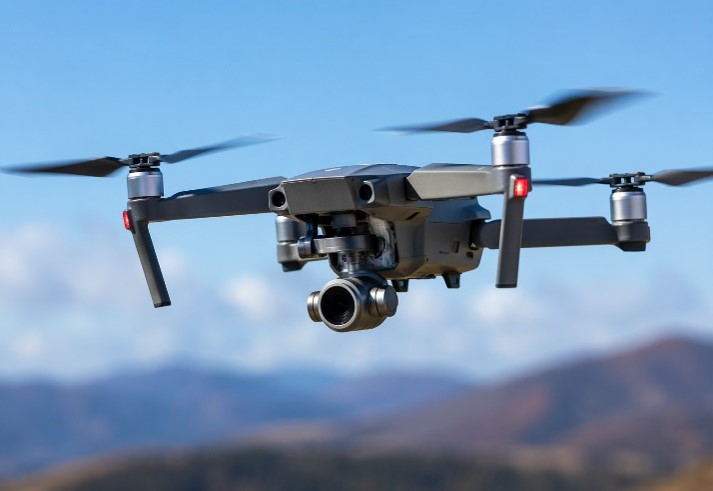
In the late 2010s, remotely piloted aircraft systems (RPAS), or drones, were increasingly integrated into search and rescue operations across Australia.
Their ability to rapidly deploy, provide real-time imagery and operate in hazardous environments has enhanced situational awareness and search effectiveness.
Environmental Scan: Search and Rescue in Australia
In 2023, AMSA commissioned the Environmental Scan report on behalf of the National Search and Rescue Council.
The scan identified two mega-trends driving change for police forces – climate change and rapid changes in technology.
The scan noted these mega-trends are occurring in an environment when demand for search and rescue is changing, and at the same time there are changes in how SAR is delivered to communities.
2026
50 years of coordinated national search and rescue
In 2026, Australia marks 50 years of national search and rescue cooperation.
From early coordination arrangements in 1976 to today’s highly integrated national system, Australia’s approach to search and rescue has evolved to become increasingly unified, effective and focused on saving lives.
This milestone also marks the release of the NATSAR Council Strategic Plan, building on the findings of the Environmental Scan and setting the Council’s five-year direction to strengthen national alignment, support people and capability, and prepare Australia’s search and rescue system for emerging challenges and opportunities.
This anniversary recognises all those whose collective efforts have helped shape Australia’s national search and rescue arrangements over the past 50 years.