AMSA Connect phone services may have longer wait times on Monday 1 June 2026 while we operate with reduced staffing due to the Reconciliation Day Public Holiday in Canberra. Our search and rescue team will continue to operate during this time.
Showing 221 - 240 of 701 results for WA 0859 3970 0884 Perhitungan Renovasi Plafon PVC Warna Putih Silver Berpengalaman Tangen Sragen
- Air search observer trainingOur search and rescue modules provide background information as well as information about preparation, principles of how to conduct a search and rescue operation and how to respond to specific kinds of emergency.Last updated: 05/14/2025
- Australia Post retail outletsYou can submit your completed Seafarer form 419 or Certificate of competency application form 426 at participating Australia Post retail outlets.Last updated: 10/31/2025
 Fisher invents 'Kool' alternative to polystyrene cold-chain packagingIn a small town in Far North Queensland, a local fisher and his wife have made a breakthrough in the development of sustainable cold-chain packaging.Last updated:
- Shipping registration feesFees related to registration on the Australian General Shipping Register and Australian International Shipping Register.Last updated: 10/01/2025
- Containers overboardShipping containers lost from ships are a cause of pollution in the marine environment.Last updated: 03/05/2021
- Focused inspection campaign - planned maintenance outcomes reportPlanned Maintenance – 15 January 2022 to 28 February 2022AMSA conducted a Planned Maintenance Focused Inspection Campaign (FIC) over the period 15 January 2022 to 28 February 2022.Last updated: 10/26/2023
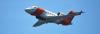 Challenger aircraftWe have four Bombardier Challenger 604 jet aircraft for search and rescue. The Challengers are based out of Perth, Melbourne and Cairns.Last updated: 05/14/2025
- Complex maritime emergencies workshopIn June 2018 our Response Division delivered a workshop in Melbourne which explored how Australia could deliver an effective response to a complex maritime emergency.Last updated: 10/28/2020
- Focused inspection campaign - hours of work and rest outcomes reportHours of Work and Rest – 01 May 2022 to 17 June 2022AMSA conducted an Hours of Work and Rest Focused Inspection Campaign (FIC) over the period 01 May 2022 to 17 June 2022.Last updated: 10/26/2023
- Electronic visual distress signalsElectronic visual distress signals are not a substitute for conventional pyrotechnic flares.Last updated: 10/27/2020
 AMSA update—2024 editionsRead previous AMSA update editions from 2024Last updated: 02/19/2025
- 2023/01 — A Satellite-Based Augmentation System (SBAS) in the Australia and New Zealand regionThis marine notice informs shipowners, operators, masters and bridge watchkeepers of the availability of a Satellite-Based Augmentation System (SBAS) in the Australia and New Zealand region.Last updated: 01/10/2025
- Protection of the sea conventions and legislationAustralia is a part of the International Maritime Organization — maritime safety and marine pollution prevention are more effective when carried out internationally.Last updated: 12/03/2024
- Electronic Navigational ChartsThe Australian Hydrographic Office (AHO) produces and publishes Electronic Navigational Charts (ENC) covering Australian, Papua New Guinea, Solomon Islands and Australian Antarctic Territory waters.Last updated: 05/09/2023
- APL England container lossIn rough weather, early in the morning of 24 May, about 50 containers were lost overboard from the Singapore-flagged container ship APL England. Read our regular updates.Last updated: 08/29/2023
- Global maritime distress and safety systemThe global maritime distress and safety system (GMDSS) connects you to coast stations and vessels via satellite and radio communications when you're out at sea.Last updated: 10/09/2023
- Chief mate less than 3000 gross tonnage (yachts)This international certificate enables you to work as a Watchkeeper Deck officer on yachts less than 3000 gross tonnage in any operating area.Last updated: 07/10/2024
- Arthur Phillip, 21 May 1990On 21 May 1990 an extensive oil slick was sighted approximately four nautical miles south-east of Cape Otway by the pilot of a light aircraft. The Australian-flagged tanker Arthur Phillip was later established as the source of the spill.Last updated: 11/09/2020
- Greenhouse gas emissions from international shippingIn 2023, the International Maritime Organization (IMO) adopted a revised strategy on reduction of greenhouse gas emissions from ships.Last updated: 11/17/2025
- MV Torungen, 26 July 1999On Monday 26 July 1999, the crude oil tanker the MV Torungen (25 tonnes), was secured in the offshore Varanus Island Marine loading terminal, located approximately 4.2 kilometres north-east of Varanus Island, Western Australia.Last updated: 11/09/2020