AMSA Connect phone services may have longer wait times on Monday 1 June 2026 while we operate with reduced staffing due to the Reconciliation Day Public Holiday in Canberra. Our search and rescue team will continue to operate during this time.

Showing 321 - 340 of 1078 results for WA 0812 2782 5310 Anggaran Dana Pasang Kitchen Set Atas Leter L Terdekat Salaman Kab Magelang
- Compliance and enforcement policy—Version 3 2022This policy provides an overview of compliance and enforcement options and information as to when use of each option is appropriateLast updated: 07/28/2023
- Focused inspection campaign - planned maintenance outcomes reportPlanned Maintenance – 15 January 2022 to 28 February 2022AMSA conducted a Planned Maintenance Focused Inspection Campaign (FIC) over the period 15 January 2022 to 28 February 2022.Last updated: 10/26/2023
- Survey Matters—August 2020In this edition we explain the criteria for issuing temporary permits under exemption 7, we give details of the reports that are needed when a regulated Australian vessel becomes a domestic commercial vessel, we give you a handy tour of the AMSA organisation, and more.Last updated: 11/14/2023
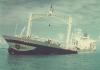 Oceanic Grandeur, 3 March 1970The oil spill from the Oceanic Grandeur in Torres Strait in March 1970 highlighted Australia’s lack of preparedness at the time to deal with a major oil spill in the marine environment.Last updated: 11/09/2020
- Continued competence—Certificate of Safety TrainingAMSA approved training organisations delivering Continued competence (Certificate of Safety Training) (COST).Last updated: 10/27/2020
- Memorandum of understanding with state and territory WHS regulatorsWe have a joint memorandum of understanding (MOU) with state and territory work health and safety (WHS) regulators. The MOU supports worker safety at sea.Last updated: 02/28/2024
- Deficiency notice codesA deficiency notice uses codes to show non-compliance found during a Port State control (PSC) inspection.Last updated: 08/07/2023
- Landing barge capsizes after exceeding maximum weight limit in vessel stability book (safety lesson)On 21 August 2019, a landing barge (operated as a Class 1E and 2D) capsized while transiting from Great Mackerel Beach to Pittwater north of Sydney.Last updated: 12/22/2025
- Investigation of domestic commercial vessel marine incidentsWe collect and analyse information from reported marine incidents to improve safety across the maritime industry.Last updated: 01/04/2021
- Carrying an observer on a commercial fishing vessel under the National LawFind out what safety checks you need to do before carrying a fishery observer onboard.Last updated:
- Consultation feedback on the national system transition 2016About the feedback we received on the National System for Domestic Commercial Vessel Safety transition.Last updated: 09/12/2023
- Onboard fire results in masters’ quick and safe decisionOn the evening of 29 May 2022, a commercial fishing vessel was on a voyage from Mackay to Cairns when the master noticed an auxiliary engine alarm. Upon lifting the engine room hatch, the master saw smoke and an orange glow and the engine room subsequently caught fire. The master quickly made the decision that they would not be able to fight the fire without jeopardising their safety and abandoned ship. An SMS risk assessment on appropriate crewing on a voyage greater than 12 hours duration should be undertaken in these situations.Last updated: 09/29/2022
 Compliance and enforcement policy 2018This policy has been superseded by the 2020 Compliance and enforcement policy.Last updated: 07/28/2023
- Survey Matters—December 2020In this edition we give guidance on managing some of the changes mentioned in Schedule 1 of MO503, explain electrical plan approval requirements, and more.Last updated: 04/04/2025
- Discussions at the IMOEnhanced fishing gear requirements are being developed in talks at the International Maritime Organization (IMO).Last updated:
- Exhaust Gas Cleaning SystemsAnnex VI of the International Convention for the Prevention of Pollution from Ships (MARPOL Annex VI) allows ships to use exhaust gas cleaning systems (EGCS) to comply with the 0.50 per cent m/m sulphur fuel oil limit that commenced on 1 January 2020Last updated: 08/01/2025
- Fatigue contributes to fishing vessel groundingOn the morning of 24 April 2022, a fishing vessel ran aground on a reef between Bundaberg and Torres Strait. The master and two deck hands had been underway for six days prior to the grounding. The master was fatigued, having had little sleep given the watchkeeping schedule and the competency levels of the two deckhands.Last updated: 12/14/2022
- Commercial fishing vessels travelling in the exclusive economic zoneDomestic commercial fishing vessels may transit between the exclusive economic zone (EEZ) around Norfolk island and the Australian mainland.Last updated: 11/21/2022
- Overview of the new survey regimeAll domestic commercial vessels are required to have a national law certificate of survey—unless an exemption applies.Last updated: 06/12/2020
- Arthur Phillip, 21 May 1990On 21 May 1990 an extensive oil slick was sighted approximately four nautical miles south-east of Cape Otway by the pilot of a light aircraft. The Australian-flagged tanker Arthur Phillip was later established as the source of the spill.Last updated: 11/09/2020