The website is undergoing maintenance today from 11am AEST. You may experience temporary loading issues. We apologise for any inconvenience.

Showing 421 - 440 of 1484 results for how to invest with a bank brokerage account
- AMSA Board Audit and Risk Committee charterThe AMSA Board Audit and Risk Committee was established as a sub-committee of the board of AMSA to assist the board discharge its responsibilities.Last updated: 07/02/2025
- 2025/02 - Reduction of underwater radiated noise (URN) from shippingThe purpose of this marine notice is to draw attention to the International Maritime Organization’s (IMO) non-mandatory revised guidelines for the reduction of underwater radiated noise from shipping to address adverse impacts on marine life.Last updated: 06/10/2025
 Fixed wing aerial dispersant capabilityAs manager of Australia’s National Plan, we have a fixed wing aerial dispersant capability as a key component of Australia’s capacity to respond to oil spills in the marine environment.Last updated: 03/13/2024
- Polluter pays—security for costsAustralia’s policy is that those who pollute our marine environment should be responsible for cleaning up and repairing the damage they have caused. If AMSA has to do this because they do not, then they should pay AMSA.Last updated: 03/11/2021
 Safety Lessons from Marine Incident Investigation – No.1 – October 2021Serious injury to pilot on class 2 vessel in poor weather conditionsLast updated: 05/09/2022
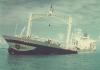 Oceanic Grandeur, 3 March 1970The oil spill from the Oceanic Grandeur in Torres Strait in March 1970 highlighted Australia’s lack of preparedness at the time to deal with a major oil spill in the marine environment.Last updated: 11/09/2020
- AMSA policy on regulatory treatment of uncrewed and/or autonomous vesselsThis policy explains our approach to the medium-term regulation of uncrewed, remotely operated and autonomous vessels operating in Australian waters.Last updated: 01/04/2021
- Dispersant responseChemical dispersants are one of the response tools available during oil spill responses.Last updated: 03/07/2025
- Survey Matters March 2024In this edition we talk about Draft instruction for ultrasonic thickness measurement for metallic vessels, Transitional requirements, Proposed changes to SAGM Pt 2 Stability booklets and moreLast updated: 04/02/2024
- Ferry-in-chains endorsementApply for an endorsement that allows you to command and operate the engines of a vehicular ferry-in-chains attached to the shore by cable.Last updated: 06/30/2025
- Survey Matters—March 2022In this edition we explain correct and incorrect use of conditions.Last updated: 04/05/2022
- Search and rescue incidents 2019-20Find out about the search and rescue incidents we attended between July 2019 and June 2020Last updated: 05/21/2021
- AMSA BoardOur Board is appointed by the Minister for Infrastructure, Transport, Regional Development and Local Government.Last updated: 06/11/2026
- myAMSAOur online application portal for near coastal certificates of competency.Last updated: 11/08/2024
- Regulator Performance Framework self assessment report 2019-20We undertook our fifth annual self-assessment of its performance against the Regulator Performance Framework in August 2020Last updated: 12/22/2020
- Domestic crew certification reforms starting 1 January 2023Regulatory requirements for certificates of competency, sometimes referred to as ‘tickets’, apply to thousands of Australians working across the domestic commercial vessel (DCV) industry.Last updated: 03/30/2022
- Exemption 15 - Marine Safety (Scientific research and educational activities)This exemption allows people who work on a vessel involved in scientific activities, including research or educational activities, to perform duties as master of a vessel without a certificate of competency.Last updated: 08/20/2025
- Supervisory definitionsLearn the differences between general and direct supervisionLast updated: 02/29/2024
- Calculate sea service for an international certificateHow to calculate your sea service before you apply for a sea service assessment.Last updated: 07/01/2024
- Exemption 06 - Marine Safety (Periodic survey, equipment certification, compass adjustment and liferaft servicing)This exemption allows DCV owners/operators a time extension for obtaining periodic surveys, or a new certificate of currency for equipment. It also allows them to operate without required compass adjustments, or while a liferaft is being serviced.Last updated: 12/09/2025