AMSA Connect phone services may have longer wait times on Monday 1 June 2026 while we operate with reduced staffing due to the Reconciliation Day Public Holiday in Canberra. Our search and rescue team will continue to operate during this time.

Showing 521 - 540 of 701 results for WA 0859 3970 0884 Perhitungan Renovasi Plafon PVC Warna Putih Silver Berpengalaman Tangen Sragen
- Certificates affected by STCW amendmentsDue to amendments to the International Convention on Standards of Training, Certification and Watchkeeping for Seafarers 1978 (STCW), refresher training is required for some certificates.Last updated: 10/27/2020
- Trawler inpull winch reduces risk of person overboardThis safety lesson describes how experienced Queensland prawn trawl fisher, Tony Sterling, developed an inpull winch that pulls in both sides of the trawl gear at the same time. The winch has delivered major safety benefits because crew no longer need to go out onto the booms.Last updated: 08/29/2024
- 6/2018—Limitation of sulphur emissions from cruise vessels while at berth in Sydney HarbourThe purpose of this marine notice is to inform cruise vessel masters and operators of AMSA’s policy on limiting sulphur emissions from cruise vessels[1] when at berth in the Port of Sydney Harbour.Last updated: 08/26/2019
- National Environmental Maritime OperationsNational Environmental Maritime Operations (NEMO) is an incident management system used to manage and monitor national maritime environmental emergencies.Last updated: 11/09/2020
- Pollution responseAn online learning program providing an awareness of how AMSA combats pollution in the marine environment.Last updated: 03/30/2023
- Passenger vessel collision with unseen submerged rockA passenger vessel collided with an unseen rock, resulting in the injury of a passenger. The master navigated the vessel into unfamiliar waters that was not a normal or planned part of the passenger tour experience, and not authorised by the tour company. Owners and operators should ensure masters continue to conform to the planned or authorised route for the services they offer.Last updated: 12/20/2023
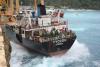 MV Tycoon, 9 January 2012On Sunday 9 January 2012, the cargo vessel the MV Tycoon broke free from its mooring at Flying Fish Cove, Christmas Island, and washed against the seawall and nearby cliff face. The ship had been loading phosphate at the time of the incident.Last updated: 11/09/2020
- Bunker certificates and the Bunkers ConventionInformation for ship owners and operators about the application of the Bunkers Convention in Australia.Last updated: 08/01/2025
- Landing barge capsizes after exceeding maximum weight limit in vessel stability book (safety lesson)On 21 August 2019, a landing barge (operated as a Class 1E and 2D) capsized while transiting from Great Mackerel Beach to Pittwater north of Sydney.Last updated: 12/22/2025
- Focused inspection campaign—DCV passenger vessel safetyAdvice to vessel owners and masters for the focused inspection campaign on passenger vessel safety requirements.Last updated: 07/17/2025
- Request a block of oral examinations held at a registered training organisation - MT 11Book a block of oral exams to be held on-site as a registered training organisation (RTO).Last updated: 10/20/2025
- Consultation feedback report - Marine Order 98 reissueThis feedback report summarises submissions we received on the proposed changes to Marine Order 98.Last updated: 03/10/2023
- Initial certificate of survey applicationsThis page outlines the types of survey reports and details an AMSA assessor looks for when reviewing an application for approval.Last updated: 04/14/2021
- Exemption 31 - Marine Safety (Expired pre-USL Code certificates)This exemption is for people who work on a domestic commercial fishing vessel with an expired pre-Uniform Shipping Laws (USL) Code certificate.Last updated: 04/01/2026
 Help shape fire safety standards for domestic commercial vesselsConsultation is now open on proposed changes to the National Standard for Commercial Vessels (NSCV) Part C4 – Fire safety.Last updated: 11/24/2025
- Era, 30 August 1992On 30 August 1992 the fuel tank of Era was ruptured by the bow of the tug Turmoil during berthing operations at Port Bonython, South Australia, during high winds. Approximately 300 tonnes of bunker fuel was released into Spencer Gulf.Last updated: 11/09/2020
- Get an STCW certificate of recognitionIf you hold a valid STCW certificate issued by another country and want to work on an Australian-flagged vessel, you need a certificate of recognition (CoR). In some countries this is called a recognition endorsement.Last updated: 04/13/2026
- Risk reportsThe National Plan uses a risk based approach to reduce the impact of maritime environment emergencies.Last updated: 11/09/2020
- Information Publication SchemeAs a regulatory body, we are required to publish a range of information about our functions and how we carry them out. We do this under the information publication scheme.Last updated: 09/01/2025
- Exercise Constant BearingSouth Australia hosted the 2017 National Plan Exercise from 5 to 7 December in Adelaide.Last updated: 10/27/2020