
Showing 601 - 620 of 1463 results for WA 0821 1305 0400 Spesialis Hidroseeding Land Scaping Hijau Buru Maluku
- Cape St Albans Lighthouse Heritage Management Plan 2023This heritage management plan concerns the lighthouse and surrounding land.Last updated: 05/01/2024
- Scale F first aid kitSurvey vessels in these classes are required to carry a Scale F first aid kit on board: 1B, 1C (with unberthed passengers), 1D (with berthed passengers), 1E (with berthed passengers), 2B, 2C, 3B and 3C.Last updated: 12/23/2025
- Verification tool for safety management systemsYou can use this tool for continuous improvement of domestic commercial vessel safety management systems (SMS), to align your SMS with the requirements of the national law and support safe working practices.Last updated: 11/02/2023
- Survey Matters—March 2021In this edition we provide advice on how to send us large files, what to do if you receive a complaint about a survey, provide guidance on battery safety, and more.Last updated: 11/14/2023
- Vessel Traffic Services Advisory GroupThe Vessel Traffic Services Advisory Group (VTSAG) discusses matters relating to Vessel Traffic Services (VTS) in Australia.Last updated: 03/21/2023
- Artificial Intelligence (AI) transparency statementFind out how we use, assess and govern AI responsibly. This statement aligns with the Digital Transformation Agency’s (DTA) Policy for the responsible use of AI in government.Last updated: 08/04/2025
- STCW regulations explainedThere are mandatory minimum requirements for your certificates under the International Convention on Standards of Training, Certification and Watchkeeping for Seafarers 1978 (STCW).Last updated: 10/27/2020
- Board meeting communique of matters - 13 August 2025The 274th meeting of the Board was held on Wednesday, 13 August 2025, in Fremantle, Western Australia.Last updated: 10/02/2025
- Person overboard without lifejacket following risky behaviour in adverse weather conditionsOn the evening of 2 April 2022, a Sydney Harbour ferry was operating a regular route between Manly and Circular Quay. A group of young males were exhibiting risk taking behaviour on the deck during adverse weather conditions. One of the group jumped, stumbled, and fell overboard without a lifejacket. The master came about and followed the ferry track back at dead slow to find the person overboard (POB). The POB had the presence of mind to use his mobile phone torch light in the dark to alert the master of his presence and was rescued.Last updated: 11/22/2022
- Marine Order 52 consultation report December 2022Marine Order 52 (Yachts and training vessels) 2022 is a remake of Marine Order 52 (Yachts and training vessels) 2016. The commencement date of the remade Order is 1 January 2023.Last updated: 12/20/2022
- Chief mate less than 3000 gross tonnageThis certificate enables you to work as Chief mate on vessels less than 3000 gross tonnage.Last updated: 07/10/2024
- Consultation feedback report - Marine Order 98 reissueThis feedback report summarises submissions we received on the proposed changes to Marine Order 98.Last updated: 03/10/2023
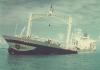 Oceanic Grandeur, 3 March 1970The oil spill from the Oceanic Grandeur in Torres Strait in March 1970 highlighted Australia’s lack of preparedness at the time to deal with a major oil spill in the marine environment.Last updated: 11/09/2020
 Major marine pollution exercise in FremantleSimulated severe oil spill to test coordinated multi‑agency response in March 2026 in WA.Last updated: 03/02/2026
- Inspections report 2025Insights from 2025 vessel inspections including detentions, common safety risks and compliance performanceLast updated:
- Very low sulphur fuel oil studyWe are responsible for responding to marine oil spills and supporting the National Plan for Maritime Emergency partners in doing the same within their jurisdictions.Last updated: 06/23/2021
- Explosion: Lithium-ion battery system involved in thermal runaway event onboard a domestic commercial vesselAn explosion occurred on a charter fishing vessel whilst berthed. The investigation identified that the ignition source was a lithium-ion battery that was not holding charge connected to a battery charger in a way that bypassed the battery management safety system. The vessel was beyond repair following the explosion.Last updated: 07/18/2025
- E-learning on the horizon for FijiMohammed Taslim is passionate about marine education in the Pacific and has his sights set on promoting e-learning study for seafarers in Fiji in the not-too-distant future.Last updated: 05/03/2022
- 2023-24 National Plan for Maritime Environmental Emergencies reviewThe National Plan for Maritime Environmental Emergencies (the National Plan) was reviewed in 2023-2024. The review made 11 recommendations.Last updated: 04/02/2025
- Exemption 41 - Marine Safety (Unpowered barges)This exemption is for owners of certain kinds of unpowered barges where it may not be practical to comply with specified construction and equipment requirements.Last updated: 07/01/2025