AMSA Connect phone services may have longer wait times on Monday 1 June 2026 while we operate with reduced staffing due to the Reconciliation Day Public Holiday in Canberra. Our search and rescue team will continue to operate during this time.
Showing 1101 - 1120 of 1410 results for WA 0859 3970 0884 Jasa Pasang Papan Nama Toko Teh Pucuk Murah Pasar Kliwon Surakarta
 Our peopleWe are a team of dedicated professionals – hear more about our experiences working at AMSA.Last updated: 05/08/2025
- Recognition of New Zealand certificatesSee how New Zealand are recognised to obtain an Australian domestic near coastal certificate.Last updated: 10/27/2020
- Visual and electronic navigation toolsWe manage a network of about 480 marine aids to navigation (AtoN) located at about 360 sites around Australia’s coastline.Last updated: 10/31/2025
 Have your say - draft standards on electrical installations now open for public commentStandards Australia is seeking feedback on 2 draft standards for electrical installations in marinas and on boats.Last updated: 09/23/2025
 August 2024 marine incident report and monthly safety lessonThere were 82 reported incidents involving domestic commercial vessels in August.Last updated: 10/02/2024
- Carriage of ammonium nitrate of class 5.1 and class 9 to and from AustraliaReminding all ship owners, ship operators and masters of the requirements for the safe carriage of ammonium nitrate on board ships with a particular emphasis on the carriage in Flexible Intermediate Bulk Containers (FIBC).Last updated: 07/09/2020
- Port State control inspection common load line issuesA load line or water line are lines on the side of a ship's hull that show where a ship can be legally loaded to.Last updated: 08/25/2021
 Out now: Maritime Safety Awareness Bulletin — cargo securing of containersThe latest edition of the Maritime Safety Awareness Bulletin highlights the critical importance of proper cargo stowage and securing, following ongoing concerns about safety risks and compliance across industry.Last updated: 09/26/2025
 New safety management system requirements now in effectNew safety management system (SMS) requirements come into effect for domestic commercial vessels (DCVs) on 1 June 2025, under Marine Order 504 (Certificates of operation – national law) 2024.Last updated: 05/30/2025
- 2023 Mission to Seafarers Maritime Art Prize and ExhibitionAustralia’s leading maritime art prize promoting excellence in maritime and seafaring subjects in art.Last updated: 12/08/2023
- Verification tool for safety management systemsYou can use this tool for continuous improvement of domestic commercial vessel safety management systems (SMS), to align your SMS with the requirements of the national law and support safe working practices.Last updated: 11/02/2023
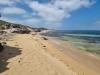 Major marine pollution exercise in FremantleSimulated severe oil spill to test coordinated multi‑agency response in March 2026 in WA.Last updated: 03/02/2026
- Join our emergency towage services panel (ATM 24AMSA280)We are seeking service providers to deliver Level 2 Emergency Towage Capability (ETC2) services as part of our national maritime emergency response network.Last updated:
- Royal Australian Navy - vessel sizeTonnages for each Royal Australian Navy (RAN) vessel, current, decommissioned, and under construction.Last updated: 07/01/2021
- We welcome...AMOSC welcomes Matthew (Matt) Breen (Operations).Last updated: 08/13/2020
 March 2024 marine incident report and monthly safety lessonThere were 105 reported incidents involving domestic commercial vessels in March.Last updated:
- Obtaining approval to use an oil spill control agent at sea or on a shorelineUnder the National Plan for Maritime Environmental Emergencies, only those OSCAs listed on the OSCA Register are able to be used in a National Plan response.Last updated: 03/18/2024
- Air pollutionAustralia regulates emissions from all ships (including cargo ships, bulk carriers and other vessels) to protect the marine environment and human health from air pollution and to ensure international emission standards are met. You must comply with these requirements when operating in Australian waters.Last updated: 08/13/2019
- NP–GUI–018: National Plan national maritime places of refuge risk assessment guidanceWhen dealing with vessels in distress or in need of assistance there is, at times, a requirement to find an appropriate location where necessary steps can be taken to prevent an escalation of eventLast updated: 03/18/2024
 Out now: safety lesson from a marine incident investigation into a fishing trawler capsizeA master suffered a head injury, and pollution control measures were required after a fishing trawler capsized in calm waters close to shore.Last updated: