AMSA Connect phone services may have longer wait times on Monday 1 June 2026 while we operate with reduced staffing due to the Reconciliation Day Public Holiday in Canberra. Our search and rescue team will continue to operate during this time.
Showing 1 - 20 of 254 results for WA 0859 3970 0884 Pembuat Pintu Besi Sederhana Murah Turi Sleman
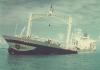 Oceanic Grandeur, 3 March 1970The oil spill from the Oceanic Grandeur in Torres Strait in March 1970 highlighted Australia’s lack of preparedness at the time to deal with a major oil spill in the marine environment.Last updated: 11/09/2020
 Focused inspection campaign—passenger tender vessel safety (WA/NT only)Advice to vessel owners and masters for the Focused Inspection Campaign (FIC) on passenger (class 1) vessel tenders in Western Australia and Northern Territory.Last updated: 08/30/2023
- Safe and clean seas, saving livesLast updated: 02/09/2024
- Engineering qualifications for RAN seaman officers and ratingsHow to get a engineering qualifications recognized if you are a Royal Australian Navy (RAN) seaman officer.Last updated: 03/21/2025
- Chief mate and Master certificate of competency for Royal Australian Navy seaman officerIf you are serving or have served in the Royal Australian Navy (RAN) as a Maritime Warfare Officer, this information explains how to qualify for an International Convention on Standards of Training, Certification and Watchkeeping for Seafarer (STCW) certificate of competency for a: Chief mate Master less than 3000 GT MasterLast updated: 07/11/2024
- Private seafarer recruitment and placement servicesFind out which companies are registered as a private seafarer recruitment and placement service in Australia.Last updated: 01/30/2026
- Western Australia fuel oil suppliersFind local suppliers of fuel oil in Western Australia.Last updated: 11/19/2025
- Hook-up response for fishing trawlersGetting hooked-up is one of the most dangerous situations you can experience on a trawler. Be prepared. Knowing what you and your crew need to do can save lives.Last updated: 03/23/2026
- Practical lessons from person overboard incidentsIn this safety lesson, veteran trawl fisher Mark Millward explains what he has learned from involvement in person overboard incidents. Mark has operated in the Queensland East Coast and Torres Strait Prawn Trawl Fisheries for over 40 years.Last updated: 11/28/2024
- 2022 monthly domestic commercial vessel incident reportsThe information you provide in your incident report plays an important part in guiding the way we improve maritime safety for everybody on the water. By reporting marine incidents to us, you are also meeting your reporting obligations under Australian laws.Last updated: 04/05/2023
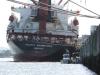 Pacific Adventurer, 11 March 2009The cargo ship Pacific Adventurer lost upwards of 270 tonnes of heavy fuel oil when holed on its port side while en route to Brisbane from Newcastle.Last updated: 11/09/2020
- AMSA BoardOur Board is appointed by the Minister for Infrastructure, Transport, Regional Development and Local Government.Last updated: 09/18/2025
- Find an accredited marine surveyorAccredited government and private surveyors, and recognised organisations who are qualified to conduct surveys on domestic commercial vessels.Last updated: 01/29/2026
- How to register an oil spill control agentApply for acceptance on the oil spill control agents register.Last updated: 11/11/2024
- Australia Post retail outletsYou can submit your completed Seafarer form 419 or Certificate of competency application form 426 at participating Australia Post retail outlets.Last updated: 10/31/2025
- Deck washing guidance for livestock vessels carrying cattle and/or buffaloWhen a livestock ship, certified with an Australian Certificate for the Carriage of Livestock (ACCL), carries cattle and/or buffalo, cargo hold decks should be washed and cleaned regularly.Last updated: 09/12/2022
- 2025 quarterly domestic commercial vessel incident reportsThe information you provide in your incident report plays an important part in guiding the way we improve maritime safety for everybody on the water. By reporting marine incidents to us, you are also meeting your reporting obligations under Australian laws.Last updated: 03/16/2026
- IMO documents for particularly sensitive sea areasIMO guidelines about Australia's particularly sensitive sea areas—the Great Barrier Reef, Torres Strait and Coral Sea.Last updated: 12/18/2023
- History of the National PlanOn 1 October 1973, the National Plan for Maritime Environmental Emergencies (National Plan) came into operation.Last updated: 10/03/2023
- LED lighting found to interfere with VHF-FM radio and AIS receptionThere is potential for light-emitting diode lighting on vessels to compromise reception on VHF frequencies.Last updated: 08/03/2020