Showing 121 - 140 of 587 results for WA 0852 2611 9277 Rincian Biaya Renovasi Plafon Warna Pink Fanta Murah Cinere Kota Depok
- NP-GUI-016: National Plan maritime discharges of oil and oily water during emergency and response situationsDischarges into the sea from a vessel of oil, oily water, decant water, or water emanating from an oily water separator is strictly regulated under Australian maritime law.Last updated: 03/18/2024
- NP–POL–004: National Plan register of oil spill control agents for maritime response useUnder the National Plan for Maritime Environmental Emergencies, only those spill response chemicals, or oil spill control agents, listed on the National Plan register of oil spill control agents caLast updated: 03/18/2024
- NP-GUI-001A: Use of National Plan equipment by states and the Northern TerritoryHow to hire National Plan equipment and conditions of use.Last updated: 03/18/2024
- NP–GUI–025: National Plan response, assessment and termination of cleaning for oil contaminated foreshoresStructured guidance for identifying when to stop the response to a maritime environmental emergency.Last updated: 03/18/2024
- Commercial fishing vessels travelling in the exclusive economic zoneDomestic commercial fishing vessels may transit between the exclusive economic zone (EEZ) around Norfolk island and the Australian mainland.Last updated: 11/21/2022
- 2015/07 — Piracy and armed robbery against shipsPreventing and suppressing acts of piracy and armed robbery against ships.Last updated: 01/10/2025
- Recommendations from the investigation into the loss of the passenger vessel ConceptionDCV Safety Alert: 1/2021 aims to raise awareness of recommendations made by the United States, National Transportation Safety Board, following the investigation into the fire and subsequent loss of the passenger vessel Conception.Last updated: 01/11/2021
- 2021 monthly domestic commercial vessel incident reportsThe information you provide in your incident report plays an important part in guiding the way we improve maritime safety for everybody on the water. By reporting marine incidents to us, you are also meeting your reporting obligations under Australian laws.Last updated: 05/09/2022
- 2022/02 — Proper stowage and securing of cargo containersThe purpose of this notice is to remind vessel owners, operators and masters of:Last updated: 05/19/2025
- Kirki, 21 July 1991On 21 July 1991 Greek tanker Kirki lost its bow off the coast of Western Australia, resulting in a major pollution incident.Last updated: 11/09/2020
- Contact usFind out how to get in touch with AMSA Connect, emergency services, our head and state offices and media team.Last updated: 04/07/2026
- Western Australia fuel oil suppliersFind local suppliers of fuel oil in Western Australia.Last updated: 11/19/2025
- Residual current devicesResidual current devices minimise the risk of a person receiving an electric shock or being electrocuted when using plug-in electrical equipment on board vessels.Last updated: 10/16/2023
- Construction - C3Constructing the hull, decks, superstructures, deckhouses and bulkheads.Last updated: 11/07/2024
- Search and rescue incidents 2015–16Our search and rescue incidents from 2015–16.Last updated: 10/26/2020
- PrivacyOur privacy policy tells you how we protect and handle your personal information.Last updated: 08/02/2024
- 2022/13 — Guidance document for the recording operations in the oil record book part IThis marine notice advises of the availability of guidance for the recording of operations in the Oil Record Book Part I – machinery space operations (all ships), prepared and issued by the International Maritime Organization (IMO).Last updated: 01/10/2025
- Updated NOPSEMA publicationsNOPSEMA has been working with state authorities to improve and streamline consultation practices within the offshore petroleum industry, and provide advice on regulatory requirements for offshore petroleum activities.Last updated: 11/14/2023
- Global maritime distress and safety systemThe global maritime distress and safety system (GMDSS) connects you to coast stations and vessels via satellite and radio communications when you're out at sea.Last updated: 10/09/2023
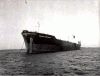 Princess Anne Marie, 14 July 1975On 14 July 1975 the Marine Operations Centre in Canberra was alerted that the oil tanker Princess Anne Marie had sustained a large crack in its hull approximately 300 miles off Western Australian.Last updated: 11/09/2020